

AI SEO Glossary: Essential Terms for Coaches and Service Providers
Quick definitions of essential search and AI terms – explained in plain English for people who’d rather be doing anything else instead of decoding tech jargon.
Quick Links:
A
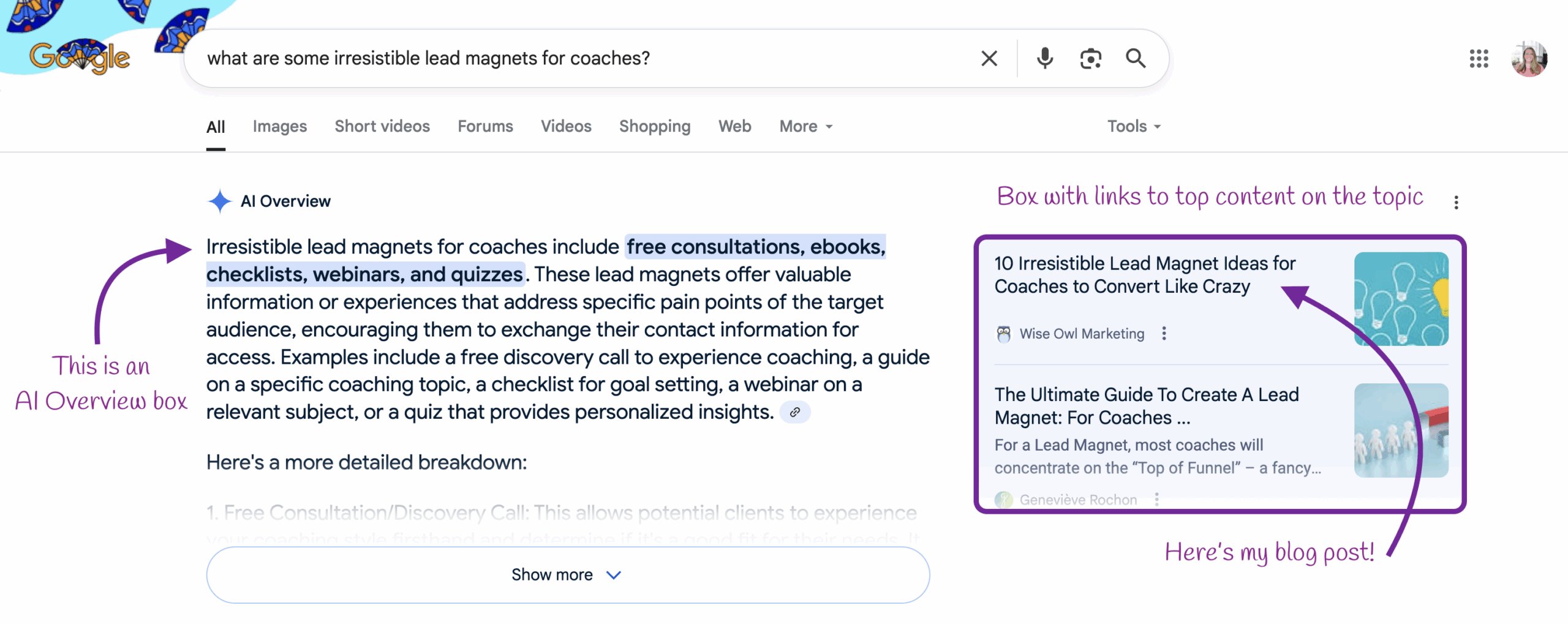
AI Overviews (AIOs) Those helpful summary boxes that appear at the top of Google search results, directly answering your question. Think of them as Google’s AI giving you the “TL;DR” version of the best answers it found. Here’s an example:
AI SEO (Artificial Intelligence Search Engine Optimization) The practice of creating content that AI-powered search engines can easily understand and recommend. It’s like speaking AI’s language so it can connect you with people who need your help.
AEO (Answer Engine Optimization) Optimizing your content to be featured in direct answer results rather than just traditional search listings. It’s about being quoted, not just found.
Algorithm The complex set of rules search engines use to decide which content to show for each search. Think of it as Google’s recipe for ranking websites – and it changes frequently!
Alt Text The descriptive text you add to images that tells search engines (and screen readers) what the image shows. Example: “Woman having breakthrough moment during coaching session” instead of just “IMG_1234.jpg”Example of Alternative Text (ALT Text) in WordPress
B
Backlinks Links from other websites pointing to your site. They’re like digital referrals – the more quality sites that link to you, the more search engines trust your expertise.
Bounce Rate The percentage of people who visit your page and leave without clicking anything else. High bounce rates can signal that your content didn’t match what people were looking for.
C
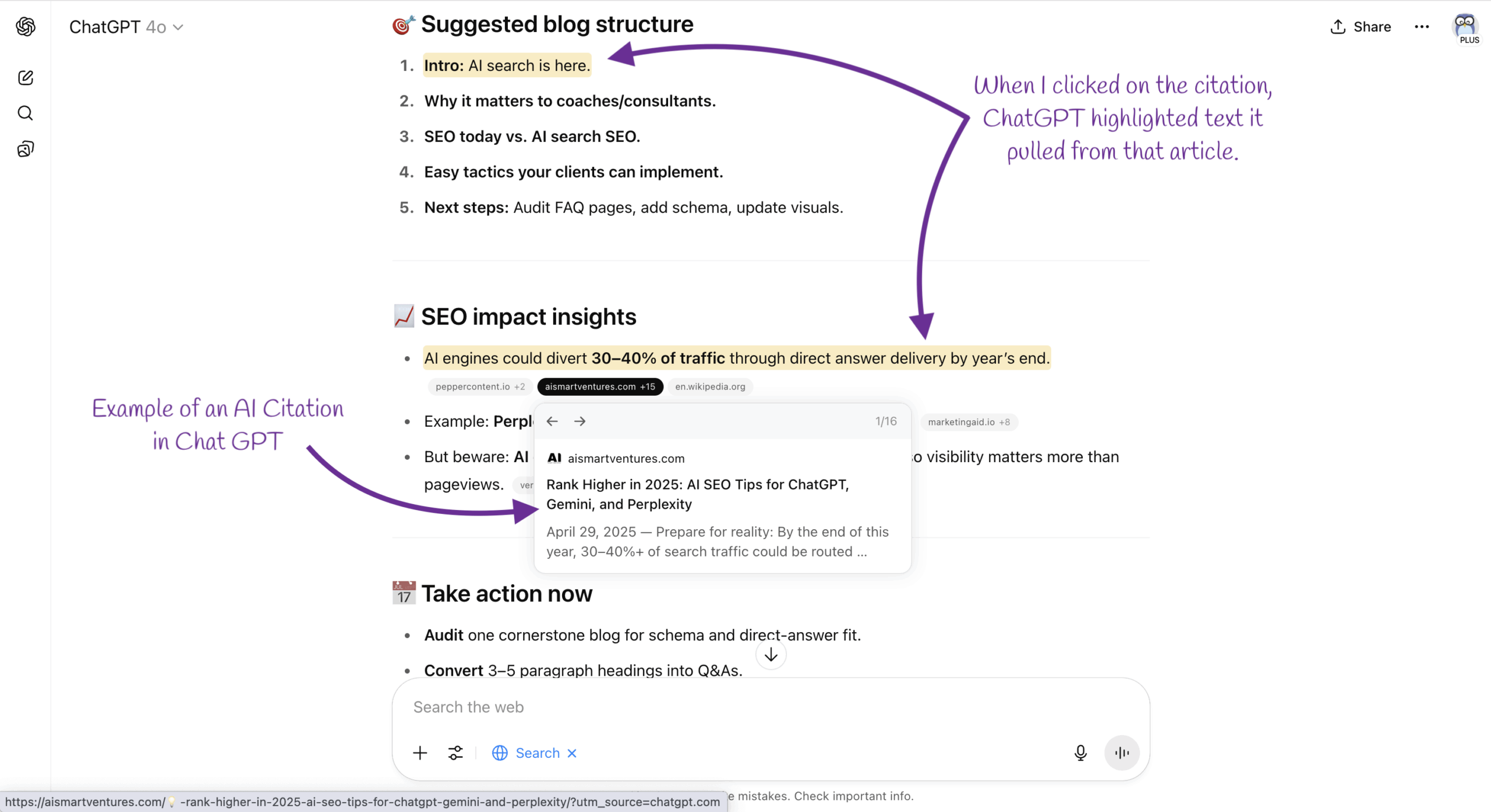
Citations When AI tools or search engines mention or reference your content as a source. It’s like being quoted in a magazine – even if people don’t click through, they see your expertise.
Content Clusters Groups of related articles all focused around one main topic. Think of it as creating a comprehensive resource library on each problem you solve for clients.
Conversational Search When people search using natural language, like asking “How do I stop feeling like a fraud at work?” instead of typing “imposter syndrome tips.”
Core Web Vitals: Google's set of specific metrics that measure user experience on your website, including how fast your page loads, how quickly it becomes interactive, and how stable the content is while loading. These metrics directly impact your search rankings, making them essential for coaches who want their websites to perform well in search results.
Crawling How search engines scan and read your website content. Like having a really fast reader go through everything on your site to understand what it’s about.
Crawl Budget: The number of pages Google will crawl and index on your website within a given timeframe. For coaches with smaller websites, this typically isn't a concern, but understanding crawl budget helps you prioritize which pages are most important for Google to find and index regularly.
F
Featured Snippets The answer boxes that appear at the top of search results (position zero). When your content gets featured here, you’ve hit the jackpot! These are quotes pulled verbatim from one site and can ~43% click-through rate!

G
GEO (Generative Engine Optimization) Optimizing content specifically for AI tools like ChatGPT, Claude, and Gemini so they’re more likely to cite and recommend your expertise.
Google Business Profile Your business listing on Google that shows up in local searches and maps. Essential if you work with clients in your area.
Google Search Console Free tool from Google that shows how your website performs in search results. Like getting a report card for your SEO efforts.
H
H1, H2, H3 Tags HTML headings that structure your content. H1 is your main title, H2s are major sections, H3s are subsections. Think of them as your content’s outline.
I
Indexing When search engines add your content to their database so it can appear in search results. If your content isn’t indexed, it’s invisible to searchers.
Intent What someone is really trying to accomplish with their search. Are they looking to learn something, buy something, or find a specific website?
K
Keywords The words and phrases people type into search engines. For coaches, these are usually the problems your clients search for help with.
Keyword Density How often your target keyword appears in your content. Don’t obsess over this – write naturally and focus on being helpful.
Keyword Research: The process of discovering and analyzing the words and phrases people use to search for products and information. Keyword research helps businesses understand what their audience is looking for so they can tailor their marketing strategies to meet their audience's needs.
L
Local SEO Optimizing your online presence to attract clients in your geographic area. Important if you offer in-person or location-specific services.
Long-tail Keywords Longer, more specific search phrases like “confidence coaching for women entrepreneurs” instead of just “confidence coaching.”
M
Meta Description A summary or short preview of a webpage's content that appears in search engine results under the title. It provides a snapshot of what the page is about and can help users decide whether to click on the link and read more. Think of it as your content’s summary or movie trailer – it should make people want to click.

Meta Title (Title Tag, SEO Title, Page Title) A piece of HTML code that tells Google and your page users what the web page is about. It shows up as the text in your browser tab as well as the clickable link in Search Engine results.

O
On-page SEO All the optimization you do directly on your website – titles, headings, content, images, etc. The stuff you have complete control over.
Organic Search The free search results (not ads) that appear when someone searches. This is where SEO efforts pay off.
Q
Query What someone types into a search engine. Understanding common queries in your niche helps you create content people are actually looking for.
P
Page Experience: Google's ranking factor that measures how users experience interacting with your web page, including loading speed, mobile-friendliness, safe browsing, and visual stability. Good page experience signals help your coaching website rank higher in search results by showing Google that visitors have a positive experience on your site.
R
Ranking Where your content appears in search results. Position 1 is the top result, and most people don’t look past the first page (positions 1-10).
S
Schema Markup Special code that helps search engines understand your content better. It’s like adding labels to help AI tools know exactly what information you’re providing.
Search Engine Results Page (SERP) The page you see after searching for something. Includes organic results, ads, featured snippets, and other elements.
Search Intent: The underlying goal or purpose behind what someone types into a search engine - whether they want information, are looking to buy something, want to visit a specific website, or are researching local services. Understanding search intent helps coaches create content that matches what their ideal clients are actually looking for.
SEO (Search Engine Optimization) The practice of optimizing your website and content to rank higher in search engine results. The goal is helping the right people find you.
SERP Features Special elements in search results like featured snippets, AI overviews, local business listings, and image carousels.
T
Target Keyword The main search term you want a specific piece of content to rank for. Choose based on what your ideal clients actually search for.
Traffic The number of people visiting your website. Quality matters more than quantity – you want the right people, not just lots of people.
V
Voice Search When people use Siri, Alexa, or Google Assistant to search by speaking instead of typing. These searches tend to be longer and more conversational.
Z
Zero-click Search When someone gets their answer directly from the search results page without clicking through to any website. This is why citations and mentions are becoming more important than just clicks.
Quick Reference: Most Important Terms for Coaches
Must-Know Basics:
- Keywords – What people search for
- SEO – Making your content findable
- AI Overviews – Answer boxes at top of results
- Featured Snippets – The coveted “position zero”
- Citations – When AI tools reference your expertise
Content Creation:
- Intent – What searchers really want
- Long-tail Keywords – Specific, detailed search phrases
- Content Clusters – Groups of related articles
- Schema Markup – Helping AI understand your content
Measurement:
- Rankings – Where you appear in results
- Traffic – Who’s visiting your site
- Google Search Console – Your SEO report card
Don’t feel like you need to memorize all these terms! Bookmark this glossary and refer back to it as you dive deeper into AI SEO for your coaching business.
