

Hey there, I’m Heather Stephens from Wise Owl Marketing, and welcome to this week’s blog training video. I’m going to talk to you today about conversion rate and how increasing your conversion rate can increase your bottom line.
Let’s get started. We’re going to talk today about how to calculate your conversion rate. We’re going to look at some averages across different industries so that you can kind of see what your conversion rate is compared to others and how you’re doing. Then, I’m also going to show you a calculation that you can do in order to figure out what the ROI, or website value, is and what it could be if you had higher conversion.
Go ahead and grab a pen and paper. You might want to work through some of these things on your own. I am going to give you access to a worksheet at the end of this video so that you can go ahead and plug in your numbers and calculate your conversion on your website yourself.
Key Elements
Okay, let’s get started. Let’s talk about the different definitions just to make sure we’re all on the same page.
A lead is a website visitor who’s given you their contact details like their name, their email and phone, requesting more information about your business. This is a potential future customer or client.
When I refer to a lead magnet, this is something that we create that your audience wants. It has to be really good, something they’d be willing to pay for, but they’re going to get it for free in exchange for their email address. It could be a cheat sheet, or a guide, or maybe a trial membership, or a coupon, or an MP3 or video training, something along those lines. It’s going to help them solve a problem, create a transformation that they really would be willing to pay for, but of course you’re going to give it to them for free, making it irresistible.
When I talk about a conversion, it’s really a different way of saying someone who’s taken a desired action. Depending on the stage of the buying process your website visitor or your lead is in, there are different conversion goals that we try to hit. In the case of this presentation, we’re trying to get website visitors to become leads. We’re talking about collecting their email.
Your conversion rate is really the percentage of users who take a desired action on your website.
Today we’re talking about the percentage of people who give you their contact details to request information about your business.
Doing the Math
Let’s take a look at your existing numbers. How many leads do you get from your current website each month?

In order to figure out your conversion rate, you take the number of action takers, so the number of people who have given you their email address in exchange for information about your business within a specific timeframe. I usually recommend that people look at the last month and get their number of leads within that timeframe. Then take a look at how many unique visitors you had on your website during that same timeframe. By dividing the action takers by unique visitors, we’re able to determine what your conversion rate percentage on your website is.
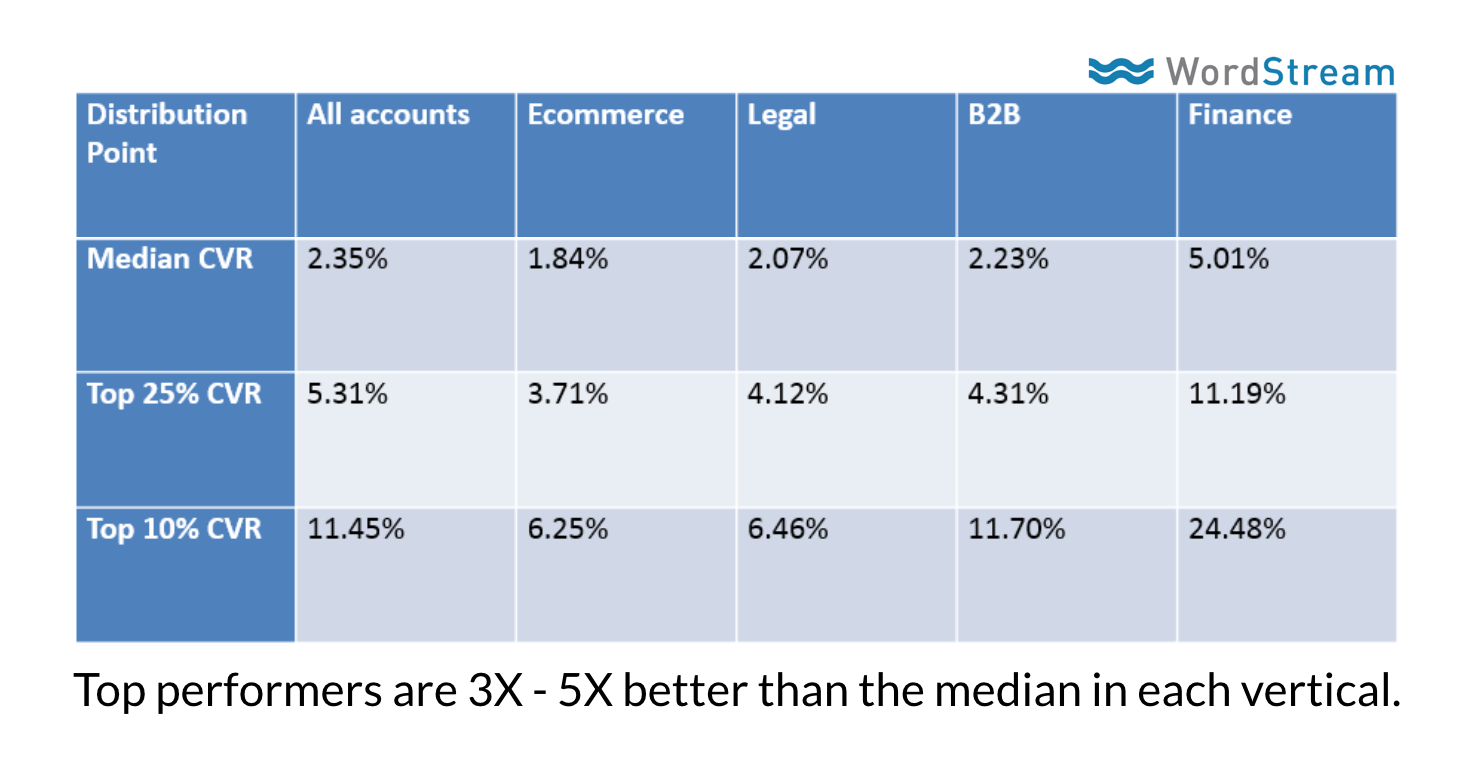
Let’s take a look at the chart below to see the average across different verticals. Depending on your industry and what you do in your business, there’s going to be an average in a top, in a very top percentage, based on that. This is looking at all accounts across the internet and then breaking it down into e-commerce, legal, business to business, and finance. What we’ll notice here, and why this is important, is the top performers. They’re getting three to five times better than the average in every single vertical. There’s some little things that you can do on your website in order to increase these conversion rates and increase the number of people who are taking action to help you get these results. It’s not like these are unicorns out there that are completely unattainable. These are attainable numbers across every industry.
Your Website Value Bottom Line
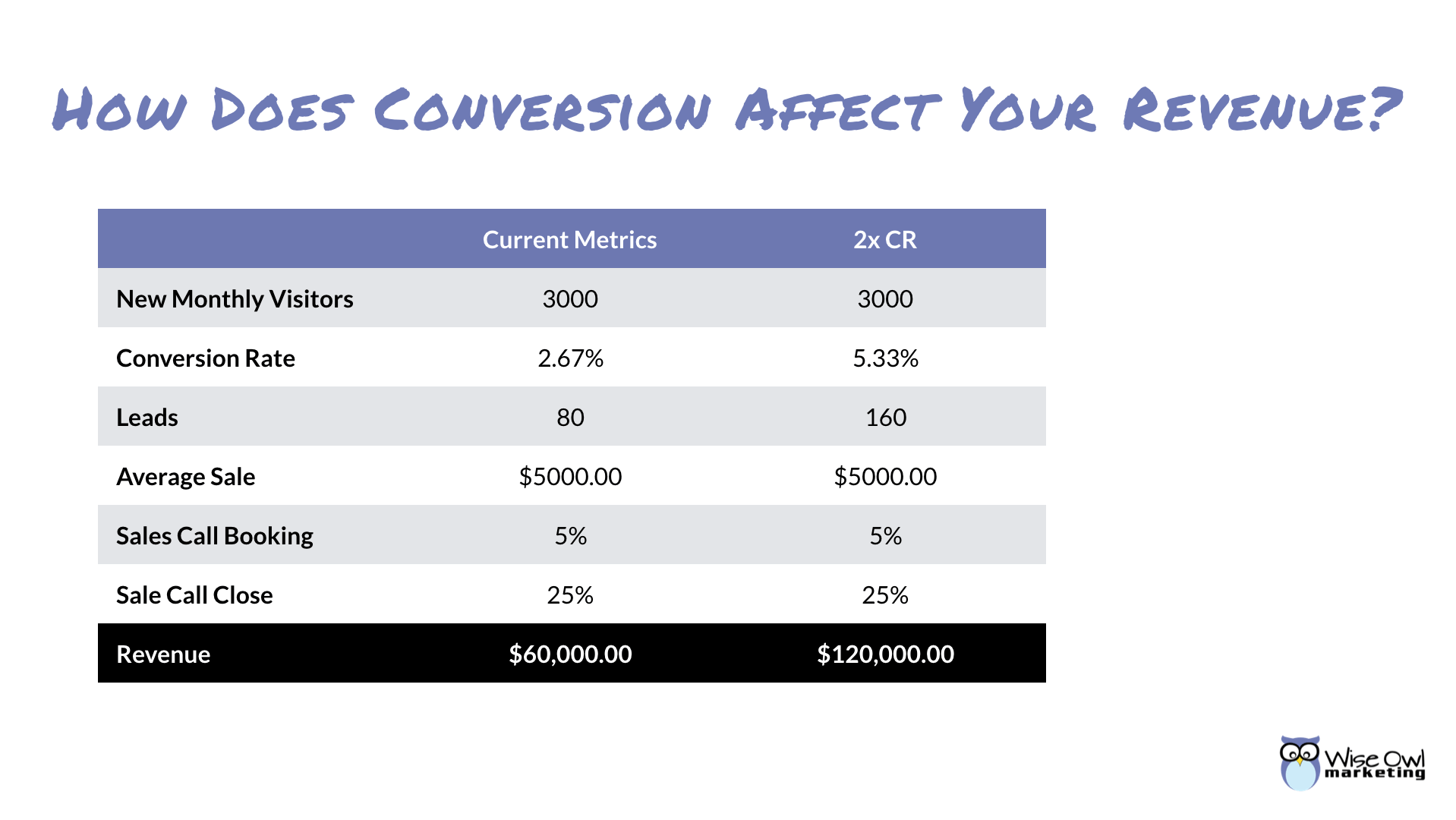
Let’s say you have a website and you’re getting about a hundred visitors a day to it, so you’re getting 3000 monthly visitors. Let’s say you have a conversion rate of 2.67, we figure that out because we look at the number of leads that you’re getting and you’re getting about 20 a week or 80 a month. That equals 2.67 for your conversion rate.
Let’s also take a look at the yearly value of a client to you. Over the course of a year, when you get a new client based on the purchases that they make, and maybe repeat sales that you get, let’s say the average yearly value of a client is $5,000.
What we want to look at that is take these numbers and figure out what your annual revenue for your website is. We need to take the number of leads that you get and figure out how many of those leads turn into a sales call. The average across the industry is about 5%, so for every 100 leads you get about five people who will book a call. From there, your sales closing percentage will vary based on how great you are at selling your product and how awesome your product is, but on average we’re going to use 25%. Of the calls that you get, you’re able to turn 25% of those calls into a paying client.
Based on these numbers (and I know they’re hypothetical) we would look at a current website revenue of earning about $60,000 a year in this first column here.

What happens if we were to double that conversion rate. We take this 2.67% and we do some optimization on the website and bump your conversion rate up to 5.33%. All the numbers are the same, you can see we have the same number of monthly visitors, but we’re getting 160 leads instead of 80. That puts us at $120,000 a year from the website revenue.
If we were to keep optimizing the website and improving it and getting your conversion rate to the 13.33%, you’d be earning $300,000 using these numbers here.
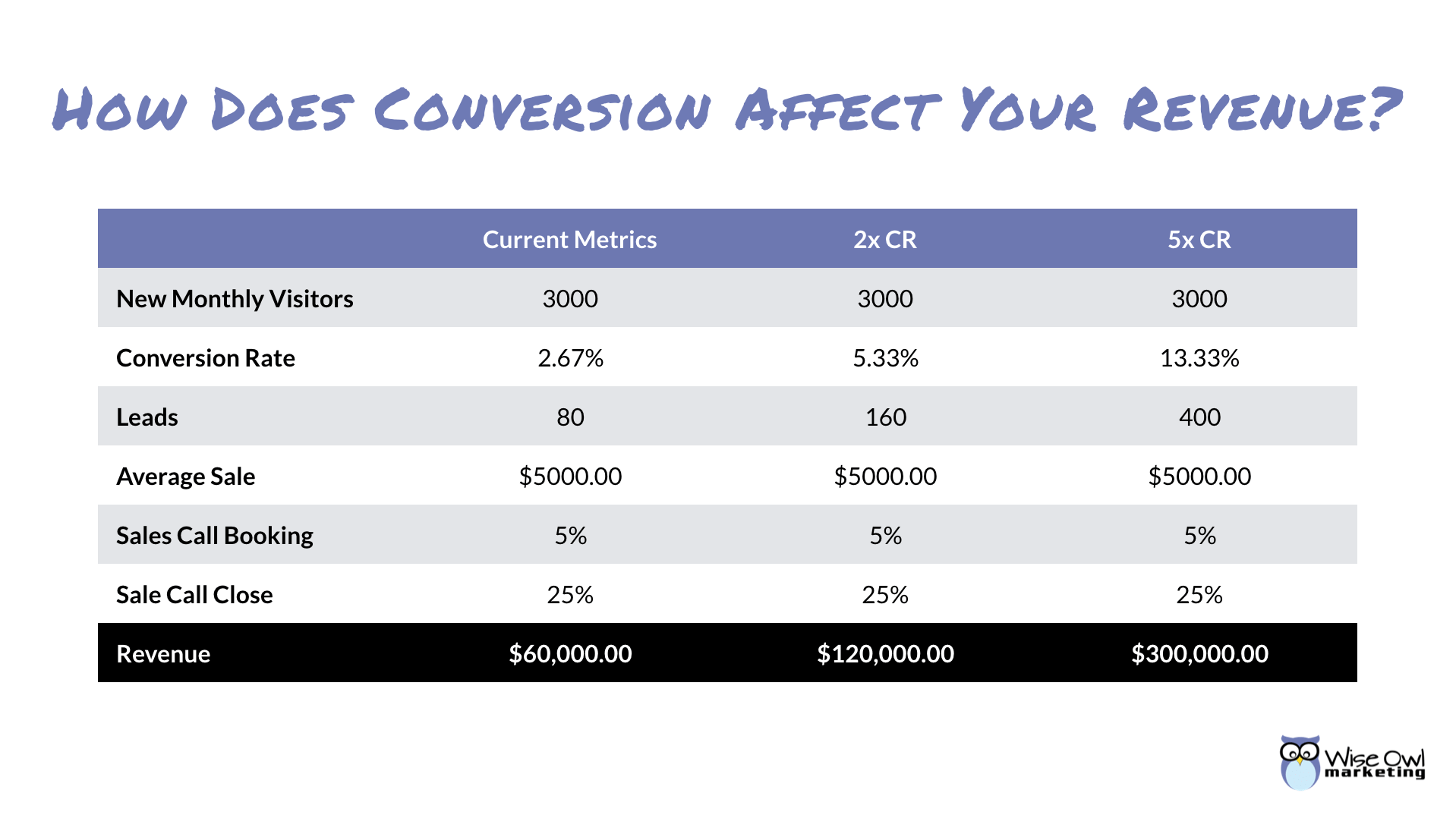
Again, it’s from the same amount of traffic. We’re not spending more on ads to get people to your site. This is from the same ad spend or the same amount of traffic that you’re driving.
Lots of people say, “But I’m not getting that many visitors to my website.” Let’s take a look at something a little smaller.
We’ll calculate it with 1,500 monthly visitors. That’s about 50 visitors a day. Let’s say your conversion rate is 2.07%. Let’s say you’re not making $5,000 a year off a client, but maybe you’ve got like a $2,500 program and a smaller package or something like that. Let’s say you’re making about $3,000 a year off a client. Well that takes your business from a side hustle of earning just under $14,000 a year from your website, to being a full-time entrepreneur if we are able to take your conversion rate from 2% to maybe 10%. That puts you at $70,000 a year.
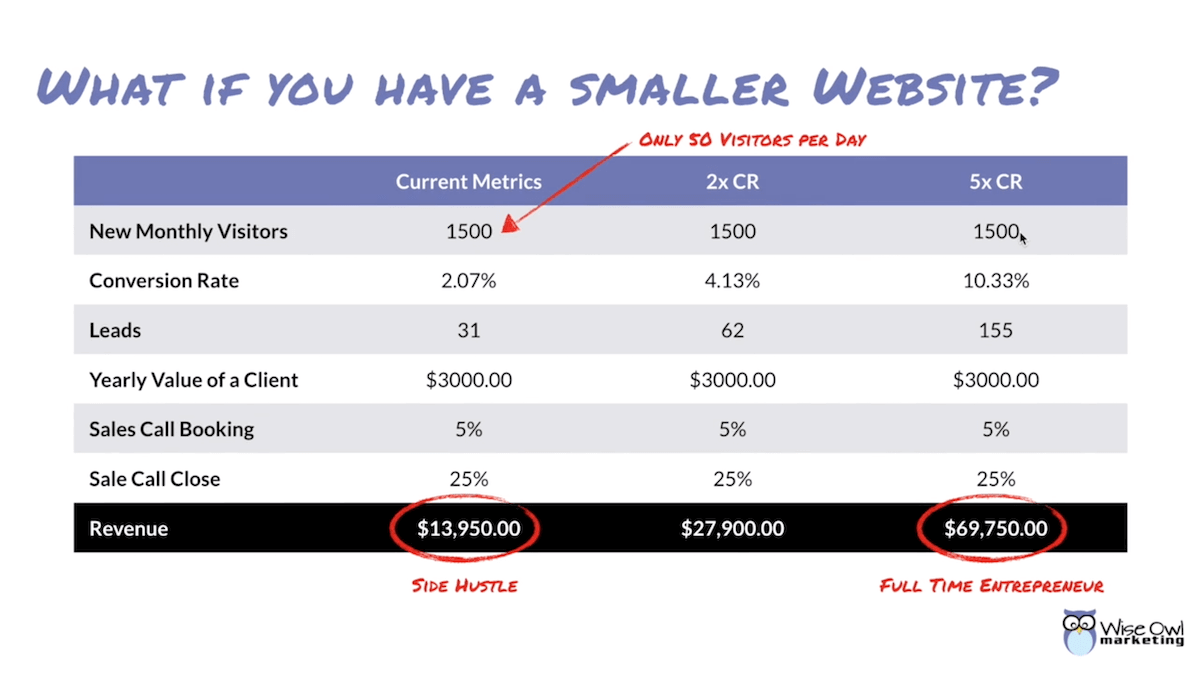
For many people, that’s the ability to quit their job in corporate and do their business and their passion full time.
That’s why this excites me so much because I love helping people to be able to live their dream and share their gifts with the world.
You can see that increasing your revenue can make a huge impact on your business. I hope this video training was helpful. Stay tuned, next week we’ll have another one for you.
In the meantime, if you would like some help building a website that increases your conversion, let us know. Go ahead and go here to fill out the application and book a time with someone on our team. We would love to help you and see you next week.
Calculate R.O.I. for Your Website Value
Why use a pencil and paper when a calculator will do the math for you? If you want a quick way to calculate your website’s R.O.I., then click here and use the Wise Owl Marketing calculator.
And remember, if you want to talk about your website with me, feel free to set up a call on my calendar.





Looking for Something Specific?

Where Should I Send Your Free 2026 Marketing Planning Bundle?
*Your free planner will be delivered to your inbox. Check your spam folder if you don't see it within 15 minutes. Submit a support ticket if you need help. By entering your email address, you agree to receive emails, including marketing tips, offers, and announcements, in accordance with my privacy policy.
