
There is no magic best time to publish blog posts, and chasing one is a distraction. Search traffic arrives for months and years after you publish, so the hour you hit the button matters far less than whether the post is good and whether another one follows it. The best time to publish is the time you can repeat. Pick a day that fits your week, publish on it consistently, and let search do the slow work.
Unlock Your Blog's Potential: Discover the Best Time to Publish Blog Posts
So, you've committed to publishing new high-quality blog content to your blog on a steady basis. Congratulations and high-fives!
I've been blogging almost every week since 2007, and I can confidently say that blogging is one of the most holistic and effective ways to generate website traffic via search, social media, referrals, and email!
Once you pass the "what do I blog about" and how do I do it consistently hurdles, the next challenge is getting people to read it!
One of the top questions I am asked by clients interested in blogging is, "When is the best time to publish blog posts?"
In this comprehensive guide, we'll explore the best times to publish blog posts for your business to help you maximize your reach, engage your audience, and potentially go viral.
Whether you're a seasoned blogger or just starting out, you want to make the best use of your time. Today's post will help you find the best time to post new content to maximize your success!
Why Timing Matters: The Impact of a Publishing Schedule on a Blog

I think we can all agree that when it comes to blogging, content is king.
But does the timing of when you publish your blog content really matter?
Or maybe this timing thing is an old blogging wives' tale?
If it's true, when is the best time?
So many questions...
A Case for Finding the Prime Time to Publish Your Blog Posts

Remember the olden days of TV before on-demand streaming?
My friends and I had a standing Thursday girl's night at 7:00 p.m. central time. Every week, we'd order takeout and pile onto my parents' old 1980s brown velvet sofa to watch Friends, Seinfeld, and ER.
I planned my art studio time and work schedule to keep Thursday nights free! If those shows had aired during the day while we were in class, we would never have seen them.
Unless you're a celebrity or mega-influencer with millions of fans hanging on your every word, your readers probably won't be planning their week around your blog.
However, finding the perfect blog publishing schedule that coincides with your readers' schedule for reading makes sense. If you publish when your readers are online, you should see higher pageviews, more social shares, and better engagement rates.
When it Comes to SEO, There is No Magic "Best Time" for Most Blogs to Hit Publish
Here's why.
While good ol' Google and other search engines do favor websites that regularly update with fresh, high-quality content, the time of day you publish won't make a big impact on your search engine rankings.
For the most part, SEO doesn't watch the clock. Bing, Google, Yahoo, and other search engines care way more about quality, relevance, and freshness of content than when you post.
There is one exception: News sites that aim to break stories first. For them, publishing timing can be crucial for SEO and reader engagement.
When is the Best Time to Post a Blog? It's Personal

Ultimately it boils down to your blogging goals.
- If you're trying to boost SEO, time doesn't matter.
- If you want to build an audience, you need to pay attention when you promote your blog content.
The best time to post is whenever you can do it consistently and when it fits your workflow.
Your energy and ability to produce quality content matter more than hitting a specific time slot.
- Posting Consistency and Frequency Trump Timing: Regular posting matters more than posting at a specific hour.
- Your Audience is Unique: Those general "best time" stats? They might not apply to your specific readers.
- Content is King-Content Quality is the Kingmaker: A well-written, valuable post that's highly relevant and better than others for the search query will perform well, regardless of when you publish it.
- Social Sharing is Where the Real Timing Game Comes Into Play: There is no universal 'golden hour' for publishing blogs-however, each audience has its own prime time. When it comes to visibility, when you share your blog post on social media often matters more than when you initially published it.
Back to the Friends, Seinfeld, and ER analogy...
We never even thought about when the episode was recorded or when they finished editing it. We only cared about when the show was aired.
Your social media audience and email subscribers are the same way.
Is There a Magical "Golden Hour" and a Best Day to Publish a Blog?
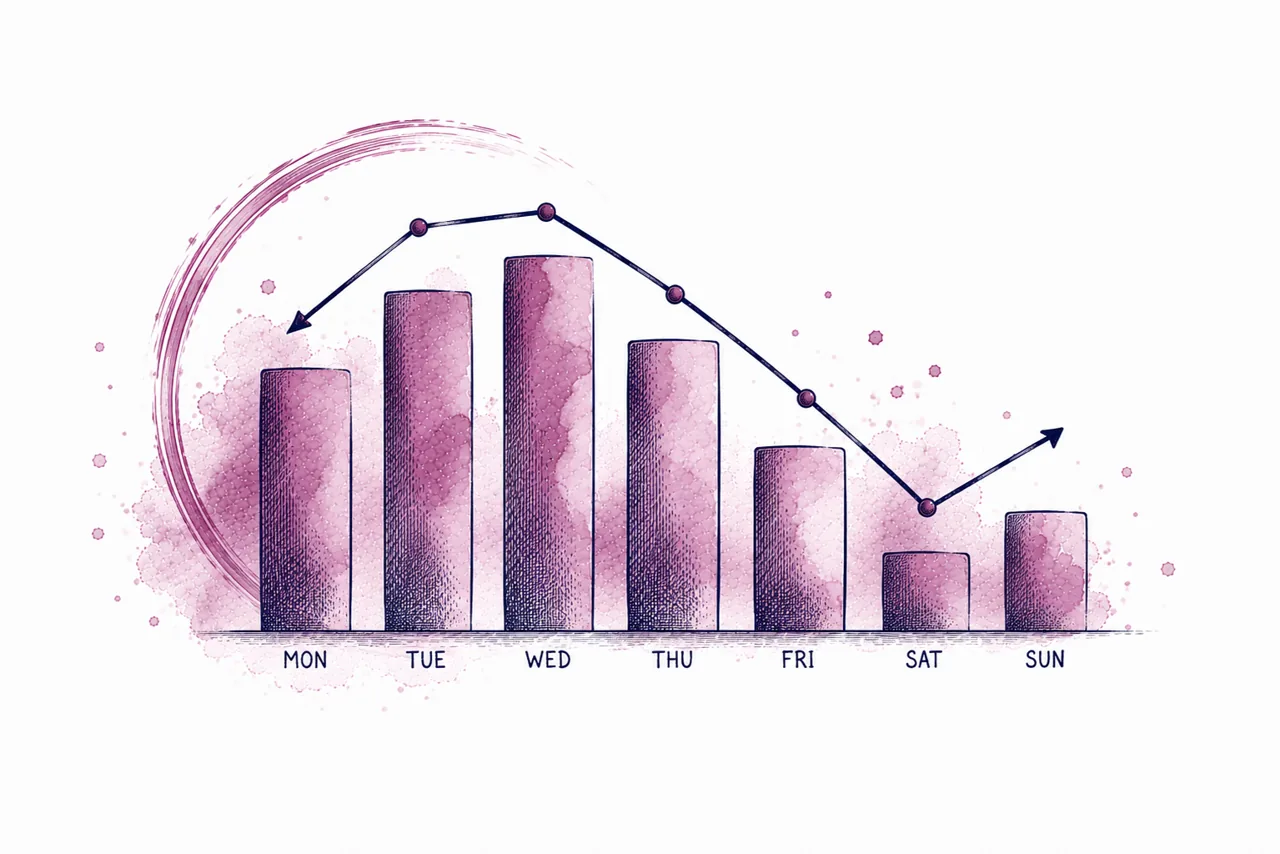
There are several studies that shed light on general trends that can guide your decision.
Many experts suggest that Monday through Thursday are the best days to publish blog posts for maximum visibility. These weekdays often see higher traffic and engagement rates compared to weekends. Here's a breakdown of each day's potential:
- Monday: As people return to work and catch up on what they missed over the weekend, Monday can be an excellent day to publish. Your content can set the tone for the week and potentially gain traction throughout the following days.
- Tuesday and Wednesday: These mid-week days often see high engagement rates. People have settled into their work routines and may be more likely to take breaks to read and share content.
- Thursday: This day can be great for publishing content that people might save to read over the weekend.
- Friday: While still a workday, Friday sees a decline in blog traffic as people wrap up their week and prepare for the weekend. Fridays are also suspected to be good for people promoting affiliate offers in their blog. The argument is that people get paid on Friday so they're more likely to buy now. I'm not so sure, but it's plausible.
- Saturday and Sunday: Weekend traffic is generally lower, but this doesn't mean you should never post on weekends. Depending on your audience and content type, weekends might actually be ideal.
Remember, these are general trends. The sweet spot for your blog posting schedule will ultimately depend on your specific audience and their habits.
The Best Time to Post a Blog According to Statistics
Back in the day when I first blogged about this topic, I did some digging to uncover these stats:
- According to Trackmaven.com, a software company specializing in Centralized Marketing Analytics," Blog posts published at 3 p.m. EST receive the highest number of social shares on average." They also say promoting your blog posts on social media on Sunday from 9 PM to Midnight EST is best for engagement and shares. Generally speaking, Trackmaven advises publishing when people have the most leisure time.
- Blogtyrant.com advises publishing on either Tuesday or Wednesday. This is because people enjoy a distraction from work. He also says that there is a sweet spot for the time you should publish: between 9:30 - 11:00 am EST.
- Kissmetrics.com says that most people read blogs in the mornings and most blogs get the most traffic on Monday around 11:00 am EST. They say that if you're blogging to get backlinks, Monday and Thursday are the best days to publish at 7:00 am EST. And if you're looking to get the most comments, 9:00 am Saturday EST is best.
- SocialFresh.com recommends you publish your blog posts from 9:00 - 10:00 am EST on Thursdays if you want social shares or Mondays at 9:00 - 10:00 am EST if you want more page views.
- Want your blog posts to go viral? A huge study of BuzzSumo data with over 100 million pieces of content revealed that more posts published on Tuesdays go viral than any other day.
That Makes Knowing the Best Time to Publish a Blog Post Even More Confusing!
So, I thought I'd do some digging to see if the blog publishing gurus had updated stats that could provide more clarity and direction.
Here's what I found...
--- crickets ---
Why aren't companies publishing studies on the best day or time to publish blog articles?
Maybe it's because the time doesn't matter.
What matters more is when you promote it. This is why the conversation around blog posting schedules is overshadowed by the talk about when to post on social media channels.
So how do you know when is the best time to post?
The best time is going to vary depending on your audience and your goal.
The Best Time to Publish a Blog was Years Ago; the Second Best Time is Today

Let's chat about the longevity of blog posts.
It's important to be aware of the limitations of relying solely on social media for traffic generation.
If you're only relying on social media to drive traffic to your offers, you need to create more content or spend cash on paid ads to remain visible. This can be a hefty investment of time and resources.
I've found that blogging once a week is manageable for most business owners; it gives you more bang for your buck since you can also share your content on social media!
Plus, your blog posts can be repurposed into content to share on social and email, giving you a more balanced traffic profile between SEO and Social.
It's Essential to Understand the Different Dynamics at Play Between SEO and Social Media
SEO is a long-game strategy.
When you write and optimize your blog posts for search engines, you are making an investment that stands a chance to mature and pay off over time. Your best posts can continue to drive traffic months or even years after they're published, growing in value as they gain authority and backlinks.
On the other hand, social media offers quicker returns.
Posting at the right time on social platforms can lead to immediate engagement and traffic spikes. However, this content tends to fade quickly, often losing visibility within hours or days.
This doesn't mean one strategy is better than the other - they both have their place in a well-rounded content strategy.
Blog posts optimized for SEO provide a lasting foundation for your online presence, while strategic social media posting can give you those quick wins and help amplify your content in the short term.
The key is to leverage both:
- Create evergreen, SEO-optimized blog content that will serve you long-term
- Use social media to give that content initial momentum and periodic boosts in visibility.
TIP: Make Blogging a Treat For Yourself!
Pick a date and time that you can enjoy the writing process. I look forward to writing my blogs. As I write this post, it's Saturday morning. Everyone's still asleep. I'm watching the sun rise over the pond from my comfy chair. The only sounds I hear are the dog softly snoring, the coffee pot hissing, and my keyboard clicking. I'm thinking about my audience, writing about something I could talk about forever, and knowing I'm creating something that will help my clients and bring me new clients for potentially years.
How Does Your Target Audience Affect Publishing Times?

Understanding your target audience is key when deciding the best time to promote your blog posts. Think about it. Different groups of people have different online habits, and tailoring your publishing schedule to these habits can really boost your blog's performance.
Here are some factors to consider about your audience and what posting schedule would fit their life the best:
Let's break it down a bit:
- What do your readers do for a living? Are they pulling all-nighters in college, working 9-to-5, or enjoying retirement? This can affect when they're most likely to be online and in a blog-reading mood.
- What industry are they in? Someone working in tech might be online at totally different times than someone in the restaurant business.
- How old are they? Your younger crowd might be up late scrolling Instagram, while the older folks might prefer their morning coffee with a side of blog reading.
- Where in the world are they? If you've got readers in a wide span of time zones, you might need to get creative with your timing. (Or just pick a time and stick to it so they know what to expect.)
- Are they phone addicts or computer lovers? Knowing if they're reading your post on their phones during their morning commute or at their desk after settling into the work day can help you pick the perfect time to post.
To get a handle on your audience's behavior, tools like Google Analytics can be your best friend. They'll show you when your blog gets the most traffic and engagement.
Look for patterns in the days and times when your content performs best. And don't be shy - you can always ask your audience directly through surveys or social media polls about when they prefer to read.
Remember, your goal is to get your content out there when your target audience is most likely to see and engage with it.
By aligning your publishing schedule with your audience's habits, you're setting your blog posts up for the spotlight they deserve!
Weekday vs. Weekend: When Do People Read Blogs?
There's been quite a debate in the blogging world about whether weekdays or weekends are better for publishing. While weekdays usually see more traffic for most blogs, don't write off weekends just yet. Let's break it down, the pros and cons:
Weekday Publishing:
- Pros: You'll generally see higher traffic and pageviews, and you're more likely to catch people during their work breaks. Plus, there's a better chance your content will get shared on professional networks.
- Cons: There's more competition since everyone and their dog seems to publish on weekdays. Your amazing content might get lost in the shuffle.
Weekend Publishing:
- Pros: Less competition means you might stand out more. You could catch readers during their downtime, which is great if you write about lifestyle or hobbies.
- Cons: Traffic tends to be lower, and people are less likely to share your content on professional networks.
The key is understanding when your specific audience will most likely read blogs. If you're writing B2B content, weekdays might be your sweet spot since professionals are in work mode. But if you're all about lifestyle or hobbies, weekends could be prime time when folks have more free time to explore their interests.
If you want to get scientific about it, run tests by publishing similar content on different days of the week and comparing their performance. This data-driven approach will help you determine whether weekday or weekend publishing (or a mix of both) works best for your blog.
Morning, Noon, or Night: Finding Your Blog's Prime Time Sweet Spot

The time of day you publish can be just as important as the day itself. Let's explore the potential benefits of publishing during different parts of the day:
Morning: Rise and Shine (6 AM - 11 AM):
- Pros: You'll catch those early birds, your content is fresh for the workday, and you might pop up in people's morning social media checks.
- Cons: Your post might get buried under a pile of other content as the day rolls on.
Noon: Lunch Break (11 AM - 2 PM):
- Pros: You could grab people during their lunch breaks. It's prime time for news or time-sensitive stuff.
- Cons: You're competing with people's sandwich-eating and cat video-watching time.
Afternoon Slump (2 PM - 6 PM):
- Pros: You might catch folks looking for a distraction from that 3 PM energy crash.
- Cons: Your post could get lost as people rush to wrap up their workday.
Evening Chill (6 PM - 10 PM):
- Pros: People are in relaxation mode, which could mean more engagement for you.
- Cons: You might miss out on those who don't check blogs after clocking out from their workdays.
Night Owl Special (10 PM - 6 AM):
- Pros: Less competition, and you could reach night owls or readers in different time zones.
- Cons: You'll likely miss a lot of readers, and your social media performance might take a hit.
Here's the deal: the best way to figure out your prime time is to experiment. Try posting at different times and keep a close eye on your analytics. Look for patterns in when your content gets the most views, shares, and comments.
Don't forget to consider what type of content you're sharing. Breaking news? Earlier in the day might be your best bet. A deep dive that requires some serious brain power? That might be perfect for evening reading.
Remember, finding your blog's sweet spot is all about understanding your audience and their habits. So mix it up, and see what works best for your unique audience!
Do Time Zones Matter?
If your blog has gone global (congrats!), you'll need to think about multiple time zones when planning your publishing strategy. Here are some tips to help your content go viral across the world:
- Identify your key time zones: Use Google Analytics to see where most of your traffic is coming from.
- Create a publishing schedule that hits peak times in your main time zones: This might mean publishing more often or using scheduling tools to release content at different times.
- Use scheduling tools: Most blogging platforms and social media tools let you schedule posts in advance. Take advantage of this to hit optimal times in different zones.
- Consider creating region-specific content: If you have distinct audiences in different time zones, you might want to create targeted content for each.
- Use social media to your advantage: Even if your blog post goes live at a not-so-great time for some regions, you can schedule social media posts to promote it at better times for those audiences.
- Analyze and adjust: Regularly review your analytics to see how content performs in different time zones and adjust your strategy accordingly.
Remember, catering to a global audience might mean compromising on "perfect" timing for any one region. The goal is to find a strategy that works best overall for your diverse readership.
How Frequently Should You be Publishing to Your Blog?

Posting frequency is like the heartbeat of your blog - blogs that go dark for periods of time feel like a ghost town.
But here's the thing: like with everything we've talked about so far, there's no one-size-fits-all rhythm. How frequently you should be hitting that publish button depends on your resources, audience, and what you're aiming for.
Let's break it down:
- Quality over quantity: One well-crafted weekly blog post trumps someone who posts three times per day, but the content is "meh."
- What do your readers expect? Your audience might feel neglected if you've been posting daily content and suddenly switch to weekly.
- SEO loves fresh content: Regular posting can help with SEO, as search engines favor fresh content.
- What can you handle? Be honest with yourself. Can you consistently produce quality content at the pace you're setting? This is especially important for business owners who have other priorities. That is, unless becoming a globally known content creator is your business.
- What's expected in your niche? Some industries (like news sites) are all about frequent updates, while others might prefer less frequent, meatier content.
So, what's the magic number? Well, it varies, but here are some common posting frequencies:
- Daily: Great for news sites or blogs with big teams (and lots of coffee)
- 2-3 times per week: A sweet spot for many business blogs
- Weekly: Gives you time to create more in-depth content. Plus, it gives you something to share with your email subscribers each week to nurture your leads and plenty of content to share on social.
- Bi-weekly or monthly: Might work if your posts are super detailed or resource-intensive
Here's my advice: play around with different posting schedules. Keep an eye on your blog's performance - like your overall traffic, how much people engage with each post, and how fast your subscriber list is growing. This will help you find that perfect posting rhythm that makes your blog sing.
Remember, the best posting frequency is one that you can maintain consistently while keeping your content quality high and your readers coming back for more.
How to Use Analytics to Determine Your Optimal Publishing Schedule

Data is your best friend when it comes to optimizing your publishing schedule. Here's how you can use analytics to nail down your perfect posting schedule:
- Set up Google Analytics: If you haven't already, install Google Analytics on your blog. This free tool provides valuable insights into your audience's behavior. It's a goldmine of insights into your readers' habits.
- Spot your traffic peaks: Google Analytics will show you when your audience is most likely to be hanging out on your site. (Psst! I've outlined some steps below if you need help finding where to look.)
- Play detective with your top posts: Look at your most successful posts. When did you publish them? Is there a pattern hiding in there?
- Don't forget social media: If you're sharing your blog posts on social platforms (and you should be!), use their built-in analytics to see when your audience is most engaged.
- Experiment and track: Try publishing at different times and days, then compare how these posts perform. Look at things like pageviews, time on page, social shares, and comments.
- Consider heat maps: Tools like Hotjar can give you a visual of how users interact with your content at different times.
- Keep an eye on email opens: If you send out notifications for new posts, track when these emails get the most love (opens and clicks).
Remember, while analytics should guide your strategy, don't get obsessed with it. Use the data as a starting point, but also trust your gut about your content and audience when deciding on the best time to post your blog.
A Beginner's Step-by-Step Guide for GA4
- Sign in to Google Analytics:
- Go to Google Analytics and log in to your GA4 property.
- Navigate to Reports:
- Click on the "Reports" tab in the left sidebar.
- Select Life Cycle Reports:
- Go to "Engagement" > "Pages and screens."
- This report shows performance metrics for your individual blog posts and pages.
- Set Your Date Range:
- In the top right corner, set your date range to analyze the relevant period (e.g., last 30 days).
- Check for Peak Traffic Times:
- To analyze traffic over time, look for the "Trends" section at the top of the "Pages and screens" report.
- You can see how pageviews vary over time, which helps identify peak traffic days and times.
- Use Explorations for Detailed Analysis:
- Click on the "Explore" tab in the left sidebar.
- Create a new exploration report (e.g., a line chart) by selecting "Free form."
- Add dimensions like "Date" and "Hour" to visualize traffic patterns over days and times.
- Filter for Specific Pages:
- If you're interested in specific blog posts, use filters to narrow down the data to particular URLs or page titles.
- Analyze User Engagement:
- Within the "Engagement" reports, you can also check the "User engagement" report, which shows active users over different time intervals.
Tips
- Check User Explorer: Under "User", you can analyze individual user paths to see when they engage most frequently.
- Regular Monitoring: Keep monitoring these reports periodically to adjust your posting strategy based on traffic trends.
- Sign in to Google Analytics:
Tools and Plugins to Help You Schedule and Publish at the Right Time
Leveraging the right tools can make it much easier to publish your blog posts at optimal times. Here are some useful options:
WordPress Plugins:
- Yoast SEO: allows you to optimize your post for the search engines.
- Publish Press: Allows you to create custom publishing schedules.
- WP Scheduled Posts: Offers an editorial calendar and social media integration.
Social Media Management Tools:
- Hootsuite: Schedules posts across multiple social platforms.
- Buffer: Allows you to queue posts for optimal times.
Analytics Tools:
- Google Analytics: Provides insights into your audience's behavior.
- Fathom Analytics: Great for people who prefer an easier to understand analytics platform that's GPDR compliant. (Use my affiliate link and get $10 off!)
Email Marketing Tools:
- Flodesk: The email marketing platform I'm using. They have simple, easy-to-understand analytics; the platform and emails are also gorgeous. (Save 50% off your first year with my affiliate link.)
- ConvertKit: Offers automation features for bloggers. (affiliate link)
All-in-One Marketing Platforms:
- HubSpot: Provides blogging, social media, and email marketing tools in one place.
- CoSchedule: Offers a comprehensive marketing calendar and analytics. (I love that it integrates right into my blog, so when I format a post, I can schedule social content at the same time!)
These tools can help you maintain a consistent publishing schedule, even if the best times to promote your content don't align with your lifestyle. Plus, they provide valuable data to help you keep refining your strategy.
Key Takeaways: Mastering the Art of Blog Post Timing
Alright, let's wrap this up with the most important points to remember when figuring out the best time to publish your blog posts:
- Know your crowd: Your audience's habits should be your guiding star. What works for a tech blog might not work for a recipe site.
- Embrace your inner data nerd: Tools like Google Analytics are your secret weapon. Use them to understand when your audience is most active.
- Mix it up: Don't be afraid to experiment with different publishing times and days. Analyze the results and fine-tune your strategy.
- Content is king, but timing is queen: Different types of content might shine at different times. A breaking news piece at 7 AM could be great, while that in-depth guide might be perfect for Sunday afternoon reading.
- Balance SEO and social: Find a publishing time that works well for both search engine visibility and social media engagement. Remember, consistency matters more for SEO, while timing is crucial for social shares.
- Be a creature of habit: Whatever schedule you choose, stick to it. It helps build audience expectations and can give your search engine rankings a little boost.
- Think global, act local: If you have an international audience, factor in multiple time zones when planning your strategy.
- Quality trumps quantity: Focus on producing content your audience will love, rather than just hitting a publishing quota.
- Use tools to your advantage: Take advantage of scheduling tools to hit optimal times consistently, even if you're not a night owl or early bird.
- Keep your eyes peeled: Regularly review your blog's performance and be ready to adjust your strategy as needed. What works today might need tweaking tomorrow as your audience grows and changes.
Remember, finding the best time to publish your blog posts is an ongoing process. There's no one-size-fits-all solution, but with a bit of patience and persistence, you'll find the perfect publishing schedule to help your blog thrive.
The most important thing? Just keep creating great content. Whether you publish at 2 PM on a Tuesday or 6 AM on a Saturday, if your content is valuable, your audience will find it.
Happy blogging, and may your posts always find their way to the right readers at the right time!
xo, Heather
Whenever you're ready, here's how I can help
Start free and go at your own pace. No pressure, ever.
- Free: Keep reading the blog and subscribe on YouTube. I share everything I know.
- DIY: Get the PeacefulBiz app to organize, plan, create, and simplify your marketing.
- Guided: Join the Peaceful Marketing Lab, and let's build together.
- Direct: Book a strategy call for 1:1 help, a custom website, or to decide which program is right for you.
Want the whole framework?
The PEACE Blueprint Guide walks you through all five pillars, with planner pages to build your own peaceful marketing system.
Get the free guide

Heather C. Stephens
27+ years in marketing and 11 helping coaches and service providers get found online without burning out. Founder of Wise Owl Marketing and creator of PeacefulBiz and the PEACE Blueprint.
More about Heather →


Get peaceful marketing ideas delivered to your inbox each week.
One practical idea at a time, written like a note from a friend who happens to know marketing. Read it and try it that afternoon.