

How would you feel if one of your best clients, who had been with you for 7+ years, called to ask how to end their service package with you?
It happened to me today. My client sold his business and is retiring to garden, make wine, travel, and enjoy a slower pace of life. The new owner has another agency they’ve been working with for years.
Situations like this used to make me sweat. Thankfully, I’m sending out two proposals for new projects today, and more discovery calls are on the calendar. I give 100% credit for my calm demeanor to the fact that I’m consistently driving traffic to a funnel that converts.
In our series of the 12 Systems that Every Coach Needs to Grow a Leveraged Business, a funnel is at the top of the list. It isn’t the first system we build, but possibly the most important.
If you struggle with inconsistency in your lead flow and sales, this post is for you, and you’d love to wake up to new leads, discovery calls, and clients every morning.
Like many of my recent articles, I aim to make this a complete guide to setting up a funnel to bring you steady leads and clients for your business. While I’m sure you could skim it and grab a few tips, I’m designing this as a funnel masterclass with step-by-step instructions.
So grab your notebook, pour some coffee, and get comfy. It’s time to create a high-value sales funnel that attracts leads, nurtures them, and converts them into high-paying clients. If you follow my lead, you’ll have a system that keeps your calendar full of discovery calls and your bank account happy with new sales.
Introduction to High-Ticket Sales Funnels
Before discussing how to build a sales funnel for your business and reviewing the stages of a sales funnel, I will address the top sales and marketing funnel questions I am frequently asked.
“What is a Sales Funnel?” and “Why Do I Need One?”
A sales funnel is a step-by-step process that guides potential customers through a series of web pages and emails, from initially becoming aware that they need to solve a problem to knowing which solution is right for them and making a purchase.
A funnel systemizes the process of nurturing leads, building relationships, and converting prospects into paying clients. A sales funnel helps you automate and streamline your sales process, allowing you to focus on delivering value and growing your business.
For coaches, course creators, and service business owners, a high-ticket sales funnel is essential for attracting and converting high-paying clients. We all want those high-ticket clients who are willing to invest significant money in exchange for premium services and results. A well-designed sales funnel can establish you as an authority, gain trust, and showcase the value of your high-ticket offer.
“How do Sales Funnels Work?”
Sales funnels work by guiding potential customers through a structured process designed to convert them from website visitors who become leads and nurture them through sales and marketing automation into becoming paying customers.”
“What is the difference between a sales and marketing funnel?”
The terms “sales funnel” and “marketing funnel” are often used interchangeably but they focus on different stages of the customer journey.
Marketing Funnel Definition
The marketing funnel outlines the stages a potential customer goes through, from initial awareness to conversion. It focuses on attracting, engaging, and educating prospects using marketing strategies.
Sales Funnel Definition
The sales funnel represents a potential customer’s steps to purchase, from prospecting to closing the sale. It’s centered around a sales strategy and conversion efforts.
While these two funnels have distinct roles, they are interconnected and work together to guide potential customers through a buyer’s journey from initial awareness to becoming satisfied customers. Effective coordination between marketing and sales teams is essential for a seamless transition between these two funnels.
“Why Should I Consider Building a High-Ticket Sales and Marketing Funnel?”
A high-ticket sales funnel follows the same principles as a regular sales funnel but is tailored for selling high-ticket offers. These offers in the four-to-six-figure range require more personalized attention and relationship-building.
The primary goal of a high-ticket sales funnel is to attract qualified leads, nurture them through the buyer’s journey, and convert them into high-paying clients.
This process involves multiple touch points and interactions with your audience, such as lead magnets, landing pages, email sequences, webinars, sales calls, and ongoing support.
By implementing a high-ticket sales funnel, you can streamline your marketing efforts and client acquisition process, attract the right type of clients, and increase your revenue potential.

A Quick Summary of the Four Sales Funnel Stages
There are 5 stages in the buyer’s journey that fit into the 4 steps of the sales funnel process.
People go through these 5 stages when they’re considering making a purchase.
- Problem Recognition: This first stage of the sales funnel is where your ideal clients realize they have a problem or need. Our goal with marketing is to help them identify and understand their challenges.
- Information Search: Clients start researching solutions at this stage in the sales pipeline. This is where we want your marketing to provide value and position you as an expert in your niche.
- Evaluation of Alternatives: Your prospects will compare different options. This is the phase where we want to showcase your unique value and benefits, so you stand out from the competition as the best option.
- Purchase Decision: This is where the decision to buy is made. We want to make it easy for buyers to choose you and your services with compelling messaging and clear calls to action.
- Post-Purchase Evaluation: After the purchase, clients assess their decision and whether hiring you was a good choice. This is the time to wow them with your onboarding system, deliver exceptional results, and turn them into loyal advocates.
Now, let’s talk about the 4 stages of the sales funnel strategy and how good sales funnels help people through these buying phases.
I’m going to focus on building an appointment funnel for your business.
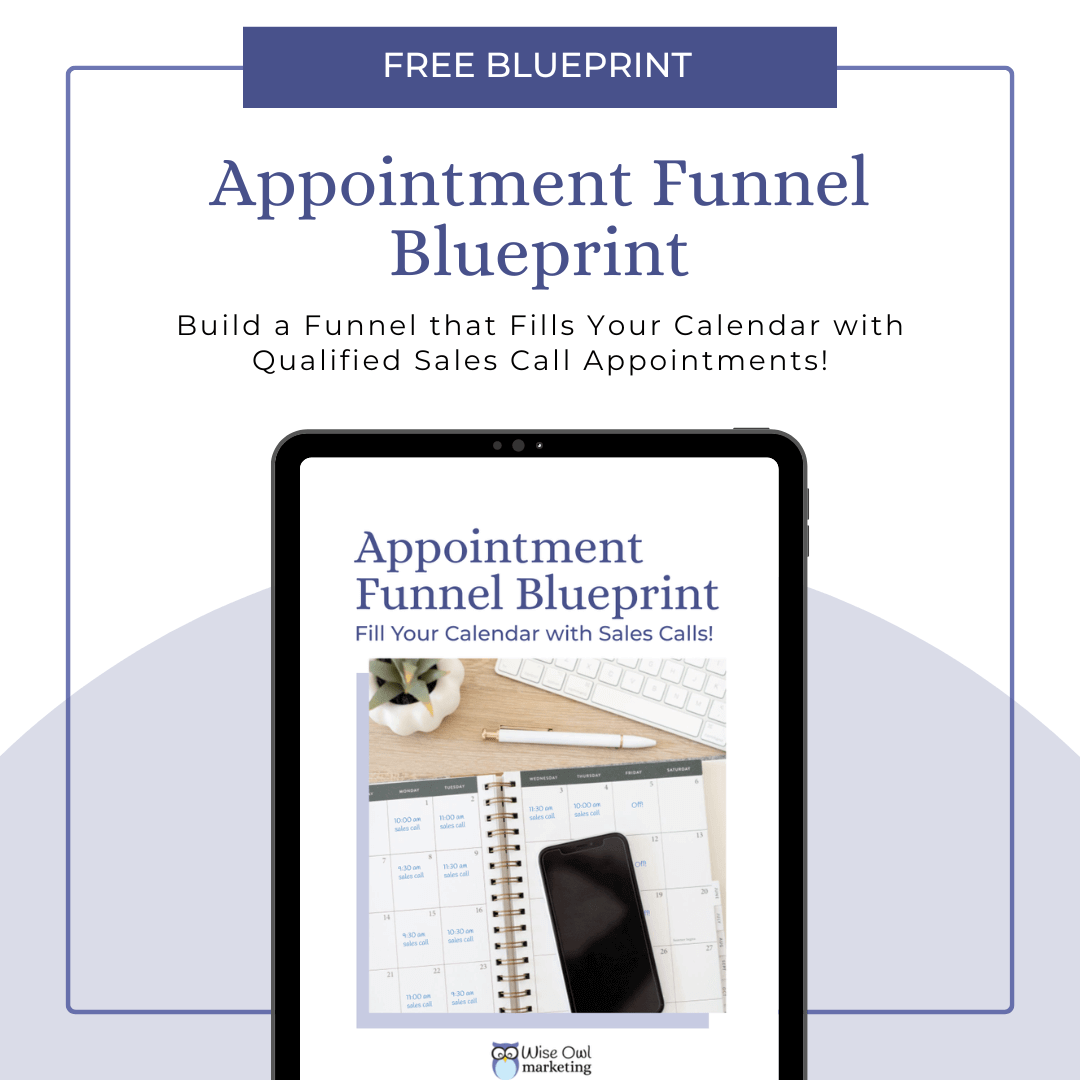
Download our free appointment funnel blueprint!
Step 1: Top of the Sales Funnel: Building Awareness
The top of the funnel is where it all begins in your customer journey. At the first funnel stage, your client knows they have a problem but are unsure what to do about it.
We want to capture your target audience’s attention at this top-of-the-funnel stage with valuable content that positions you as an expert.
Engaging Content
Create high-quality, keyword-rich, and relevant content that will address your client’s challenges and begin to earn their trust.
Focus on search-engine optimized videos, blogs, or podcasts with a long shelf-life. That means they will continue driving traffic to your site over time.
We’re gunning for longevity with this content marketing campaign, so stick to topics that will be relevant long-term and avoid seasonal or trending topics that will quickly become obsolete.
Encourage audience engagement and promote content through various channels, such as email and social media.
Here is a list of my favorite blog post ideas to get you started. You can use these ideas with a podcast, YouTube channel, social media articles, etc.
Social Media
Maintain an active and engaging social media presence. Focus on channels where your ideal clients are present.
Share informative and shareable content, participate in discussions, and build a community around your brand.
Social media updates, Reels, YouTube Shorts, etc. are good top-of-funnel content, but they don’t have the longevity of long-form content.
This is where I like to work on a few posts about seasonal and current events to ride the wave of trending topics.
Targeted Advertising
One of the fastest ways to grow your business is to utilize paid advertising campaigns, such as Google Ads or social media ads, to reach a broader audience.
While there can be a learning curve with paid ads when you’re trying to drive conversions to an offer, setting up some simple lead-generation ads and/or traffic ads to get more people to see your content is not too difficult for most people.
Community Engagement
Share your expertise and build relationships in relevant online communities, forums, and groups where potential clients gather. Focus on providing value that will ultimately drive sales and marketing results.
If you can, tap into communities that other people have built. It will allow you to leverage the trust the community builder has earned with their audience to reach new people. Look for audiences where your business compliments the community owner’s business. Setting up a reciprocal referral partnership can be a win-win for you and the other business owner.
Step 2: Middle of the Sales Funnel: Attracting Interest
Moving along the customer journey, we arrive at the Interest stage. This step of the funnel is where your audience goes from being aware of you to genuinely intrigued by what you offer. They’re searching for information on options to solve their problem and evaluating their options. This middle of the funnel is where we capitalize on their curiosity and use it to build a deeper rapport and earn their trust.
Here is how we market to potential clients in the Interest stage of your sales funnel:
Lead Magnets
About 95% of the people who land on your website are not ready to buy. Having a lead magnet that creates curiosity and entices visitors to opt in to learn more will grow your email list. That way you can market to them over time. This will help you move them through the various buying phases (and stages in your funnel), warming them up until they’re ready to talk to your sales team and decide to become clients.
Email Marketing
Develop email drip sequences to follow up with new subscribers and provide value over time. Email marketing is a fantastic way to educate your audience about how you can help them solve a problem or reach a goal.
Be sure to segment your email list with interest tags, so you can tailor your content to the specific interests of your subscribers. This will help boost open and click-through rates, driving your lead deeper into the funnel. This is a great place to leverage email marketing automation to nurture your potential clients through the sales cycle.
Webinars, Workshops, and Discovery Calls
Once someone has expressed interest in what you do by opting in to get your lead magnet, continue to provide value by inviting them to take the next step toward working with you.
If you’re focused on working one-to-many, webinars and workshops are an excellent way to provide education on topics that matter to your potential clients and position you as a go-to resource.
If you primarily work one-on-one with clients, a discovery call, clarity call, or free consultation with a sales rep is often a good next step. It works very well for higher-ticket offers where prospects want to meet you before they feel comfortable investing in your services or programs.
Step 3: Bottom of the Sales Funnel: Building Trust and Engagement
The final stage is about converting those leads into satisfied clients at the bottom of the funnel. The goal is to help them make the decision to hire you. This is where you ensure you’ve earned their trust, overcome all their objections, answered their questions, and painted the picture of what working with you could do for them.
FAQs and Clear Answers
Address potential clients’ common questions and concerns. Create a detailed Frequently Asked Questions (FAQ) section on your website or within your marketing materials. Clear, informative answers can help alleviate doubts.
Testimonials and Case Studies
Showcase success stories and case studies from satisfied clients. Real-life examples of how your services have positively impacted others can provide powerful social proof and build trust.
Comparison Guides
If applicable, create comparison guides demonstrating how your services stack up against competitors. Highlight what makes you unique and why choosing you is the best decision.
Personalized Follow-Up
After initial interactions, continue to engage with potential clients through the different stages of the buying process with personalized follow-up emails or messages. Ask if they have any more questions or if there’s anything else you can assist them with.
A Well-Defined Next Step
Clearly outline the next steps for potential clients to take. Whether scheduling a consultation, signing up for a trial, or making a purchase, make the path forward easy to understand.
Step 4: End of the Sales Funnel: Decision and Consideration
This is the final stage, where potential clients take the desired action, such as scheduling a consultation, signing up for your services, or purchasing. It’s where your sales funnel can help achieve its ultimate purpose by turning leads into satisfied clients.
Limited-Time Offers
Introduce limited-time offers or discounts for taking action within a specific timeframe to create a sense of urgency. This can encourage potential clients to make a decision sooner.
Payment Options and Plans
Be transparent about your pricing options and payment plans. Flexibility in how potential clients can pay can make your services more accessible and appealing.
Money-Back Guarantees or Risk-Free Trials
If appropriate for your business, consider offering a money-back guarantee or a risk-free trial period. This reduces the perceived risk for potential clients, making them more likely to take action.
Post-Purchase Engagement
Don’t forget about your clients after they take action. Engage with them, provide exceptional service, and encourage referrals. Happy clients can become your best advocates and bring in more business. See my post on creating an onboarding system for more details!
Remember, the sales funnel is not just a concept or a bunch of content, website pages, or emails; it’s a powerful strategy that can transform your business. By strategically guiding your potential clients through these stages, you’ll increase your revenue, create lasting relationships, and establish yourself as a thought leader.

How to Build a Successful Sales Funnel for Your Coaching Business
Now you know basically how a sales funnel works to guide potential clients through the steps of the sales process from lead to paying client. Let’s shift our focus to how to build a great sales funnel for your business.
Defining Your Niche and Ideal Client
Before we begin building your sales funnel, you must clearly understand your niche and ideal client avatar.
Choosing a Profitable Niche
A niche is a specialized area within your industry that allows you to focus on a specific target audience and offer unique solutions to their problems.
When selecting a niche, consider your expertise, passion, and the market demand for your services. Look for areas where you can provide exceptional value and differentiate yourself from your competitors.
When it comes to selecting your niche, pay attention to the potential financial capacity of your clients. You want to work with someone who can pay you what you want to earn.
For example, If you are a life coach who helps people through transition. Recent college graduates trying to gain employment in their field may need your services but are less likely to have the financial resources to pay you. Compare that to working with established professionals looking to move to a C-suite level position. They are likely to have higher salaries, and the financial gain of achieving their goal would more than pay for your services. You would be performing the same service at a higher value and could charge more.
A profitable niche allows you to position yourself as an expert and command higher prices for your high-ticket offers.
Identifying Your Ideal Clients
Your ideal client is the person who will benefit the most from your services and is willing to invest in your high-ticket offer.
To identify your ideal client, consider their demographic information, such as age, gender, location, and income level. Additionally, delve deeper into their psychographic characteristics, such as their goals, challenges, values, and aspirations.
How to do your ideal client research
I like to pull information from discovery call applications and customer surveys. I also take notes on discovery calls, client calls, and interviews. I try to capture as much information in my client’s exact words as possible to weave into my content.
If you don’t already have an audience to survey or interview, you can:
- Ask ChatGPT questions about your audience
- Read your testimonials and testimonials of your competitors
- Read book reviews and comments on social media
Understanding your ideal client on a deep level will make it easier to customize your marketing messages so your offers resonate with their needs and desires.
Use this information to tailor your offer to appeal to your ideal clients.
Ideal Client Research Action Steps:
- Research profitable niches within your industry and choose the one that aligns with your expertise and market demand.
- Define your ideal client persona by considering their demographics and psychographics.
- Tailor your offer to address your ideal client’s needs and provide tangible results.

Creating a Valuable Lead Magnet to Promote Your Product or Service
The Importance of Lead Magnets
A lead magnet is a resource you give to your audience when they provide their email address. Lead magnets are the entry point into your high-ticket sales funnel and help you capture and nurture leads.
A well-crafted lead magnet provides immediate value to your audience and addresses their specific problem or desire. It should be highly relevant to your coaching niche and showcase your expertise. It should demonstrate credibility and build trust with your potential clients.
Designing a Lead Magnet for Your Target Audience
Consider your target audience’s pain points and desires when designing your lead magnet.
What information or resources would they find valuable?
What would make a measurable difference in their lives or businesses?
You can create lead magnets in various formats, such as ebooks, checklists, templates, video tutorials, audio recordings, or mini-courses. Choose one that aligns with your target audience’s preferences and effectively delivers the desired value.
Lead magnets that are quick to create and consume tend to perform well for most audiences:
- Checklists
- Cheat Sheets
- Guides
- Resource Lists
- Case Studies
- Trackers and planners
- Calculators or tools
Ensure your lead magnet is visually appealing, well-designed, and easy to consume. Use compelling copywriting to highlight the benefits of your lead magnet and clearly communicate the problem it solves or the transformation it offers.
Our goal with your lead magnet is to give your ideal clients a quick win that builds trust in you and your system and helps them believe in themselves and that they can do this!
Lead Magnet Action Steps:
- Identify the specific problem or desire your lead magnet will address for your target audience.
- Design a valuable lead magnet in a format that resonates with your audience (e.g., guide, checklist, video tutorial).

Elements of a High-Converting Landing Page
A landing page is often the first page of your high-ticket sales funnel. It is the conversion point between your audience and your lead magnet.
A high-converting landing page effectively captures leads’ attention, communicates the value of your offer, and convinces them to take action.
Most programs have landing page and sales funnel templates you can use to help you get started.
Here are essential elements to include in your landing page:
Compelling Headline
Grab your audience’s attention with a clear and compelling headline that communicates the benefit of your lead magnet.
Engaging Copy
Use persuasive copywriting techniques to highlight the problem your lead magnet solves, the transformation it offers, and the value it provides.
Visuals and Design
Use visually appealing graphics, images, and videos to enhance the overall aesthetics of your landing page and engage your audience.
Opt-In Form
Include an opt-in form where visitors can enter their contact information to access your lead magnet.
Social Proof and Testimonials
Showcase social proof, such as testimonials or success stories, to build credibility and trust with your audience.
Call-to-Action
Clearly state the desired action you want visitors to take, such as giving you an email address to join your email list.
Benefits and Features
Highlight your lead magnet’s specific benefits and features, emphasizing how it solves your audience’s problem or fulfills their desire.
Crafting Compelling Copy
The compelling copy on your landing page is essential in persuading visitors to take action. Use the words your ideal clients actually say in your copy. The goal is to have them feel like you’re reading their minds. Use stories, stats, and persuasive language to engage your audience and create an emotional connection.
Here are some sales funnel copywriting tips:
Focus on Benefits
Clearly communicate the benefits and transformation your lead magnet offers. Explain how it will solve your audience’s problem or help them achieve their goals.
Address Objections
Anticipate any objections or hesitations your audience may have and address them directly in your copy. Provide reassurance and highlight why your lead magnet is the solution they need.
Create Urgency
Encourage visitors to take immediate action by creating a sense of urgency. Some people like to use limited-time offers, countdown timers, or exclusive bonuses to motivate them to sign up for your lead magnet. Most of the time, I prefer to remind them of the cost of inaction. What is it costing them to remain stuck? Or paint how they’d feel after ___ problem was solved?
Use Persuasive Language
Use assertive and action-oriented language to inspire your audience to take action. Use strong verbs, compelling adjectives, and emotional triggers to captivate their attention.
Optimizing Your Landing Page for Conversions
To maximize conversions on your landing page, optimizing its design and layout is essential. Here are some optimization tips:
Keep It Simple
Avoid clutter and unnecessary distractions on your landing page. For example, remove your navigation menu. Keep the design clean and focused on the key elements, such as the headline, copy, and opt-in form.
Ensure Mobile Responsiveness
Optimize your landing page for mobile devices. Test your page on different devices and screen sizes to ensure it displays correctly.
Use Clear and Actionable Buttons
Make it easy for visitors to take action by using clear and prominent call-to-action buttons. Use contrasting colors, persuasive copy, and large button sizes to draw attention.
Implement A/B Testing
Test different variations of your landing page, such as alternative headlines, copy, or button colors, to determine which elements perform best. Use A/B testing tools to track conversions and make data-driven decisions.
Landing Page Action Steps:
- Design a high-converting landing page with compelling copy, engaging visuals, and a prominent opt-in form.
- Craft compelling copy that highlights the benefits and transformation your lead magnet offers.
- Optimize your landing page for conversions by keeping the design simple, ensuring mobile responsiveness, and using clear call-to-action buttons.
- Implement A/B testing to optimize your landing page based on data and user behavior.

Building an Email Sequence to Leverage The Power of Email Marketing
Email marketing is terrific for nurturing leads, building relationships, and converting prospects into paying clients. It allows you to deliver personalized and targeted messages directly to your audience’s inbox, build trust, and provide ongoing value.
Here are some of my favorite benefits of email marketing
Direct Communication
Unlike social media algorithms or search engine rankings, email gives you direct access to your audience. You have control over when and how your messages are delivered.
Personalization
Segment your audience based on your subscriber’s interests, behaviors, or stage in the buyer’s journey. This level of personalization allows you to send relevant messages and build stronger connections with your subscribers.
Automation
Email marketing platforms allow you to automate your email sequences, saving you time and effort. Set up automated campaigns that deliver targeted messages based on your subscribers’ triggers or actions. Some of my favorite programs are:
- Flodesk (use my link and get 50% off your first year!)
- ActiveCampaign (use my link and get a 14-day free trial)
- ConvertKit (Use my link and get a 14-day free trial)
Metrics and Analytics
Email marketing platforms provide detailed metrics and analytics, allowing you to track open rates, click-through rates, and conversions. Tracking this data will help you optimize your email strategy and improve your results.
Creating an email sequence that nurtures leads
An email sequence contains automated drip emails that are sent to subscribers over a specific period or based on specific triggers. It allows you to nurture leads, provide valuable content, and guide your audience through the buyer’s journey.
Here is a framework for creating an effective email sequence
Welcome Email: Send a warm and engaging welcome email when someone joins your list. Introduce yourself, thank your new subscribers for joining, deliver your lead magnet, and set expectations for what they can expect from your emails.
Educational Content: Provide valuable content that educates and inspires your audience. Share tips, insights, case studies, or success stories demonstrating your expertise and providing value. Aim to solve specific problems or address common challenges your audience may face.
Promotional Emails: Occasionally, include promotional emails where you highlight your high-ticket offer. Clearly communicate the benefits and transformation it offers, and provide compelling reasons why your subscribers should invest in your offer.
Social Proof and Testimonials: Incorporate social proof, such as client testimonials or success stories, into your email sequence. Highlight the results and outcomes your clients have achieved through your coaching or services.
Call-to-Action Emails: Include emails with clear calls-to-action, such as inviting subscribers to book a discovery call, attend a webinar, or join a limited-time offer.
Email Marketing Action Steps:
- Sign up for an email marketing tool that fits your needs.
- Create your list or segment for new lead magnet subscribers.
- Connect your opt-in form to your landing page.
- Create your welcome email to deliver your lead magnet.
- Create an email sequence to drive people to the next step in your funnel, such as your discovery call, webinar, etc.

Driving Traffic to Your Funnel
After setting up your funnel, the next step is to direct traffic to your landing page to gather potential leads. This is where building a sales funnel begins to pay off.
Optimize your website for conversions
You’ll start by optimizing your website for conversions. Sprinkle in CTA (call to action) opt-in opportunities across your site that link visitors to your lead magnet landing page. Here are some places to promote your lead magnet on your site:
- In a header bar at the top of your site
- On pages like your homepage, about page, testimonials, page, etc.
- Mention your lead magnet in your blog posts
- Add a CTA widget to your blog sidebar
- Add a CTA widget to the footer of your site
- Consider adding an exit popup
Leverage the 3-C’s of traffic
If you remember the 4 stages of the funnel we discussed earlier, this is where we want to build awareness and attract interest. There are three ways to get visitors to your funnel that I call the 3-C’s of Traffic Generation: content, cash, and connections.
Content: Utilizing content marketing strategies
Content marketing is an effective traffic strategy that includes publishing articles, videos, podcasts, and social media. It’s a way of attracting organic traffic and establishing yourself as an authority in your coaching niche.
Create long-form blog posts, videos, or podcasts that address your ideal client’s challenges and provide actionable insights.
I recommend long-form content because it has a longer shelf-life and is search-driven. If you optimize your content for the search engines, you will increase visibility and drive more organic traffic to your landing page.
Once you’ve finished your long-form content, create posts on social media to drive traffic to it and your lead magnet. Social media platforms make it easy to connect with and engage your target audience.
You’ll want to start by figuring out:
- Where do your ideal clients hang out? Which platforms do they use the most?
- What types of content do they prefer, such as video, podcast, blog, or images?
- What topics do they want more information on?
Use a mix of organic posts, paid advertising, and engagement strategies to drive traffic to your content and opt-in landing page.
Content Marketing Action Steps:
- Identify the keyword phrases and topics that will pique your ideal client’s interests.
- Identify which social media platforms your ideal clients frequently use.
- Create engaging, high-quality content that addresses their pain points, offers solutions, and showcases your expertise.
- Optimize your content for Google, Bing, Yahoo, YouTube, Pinterest, and other search engines by including keyword phrases, engaging headlines, and meta tags and descriptions.
- Share your content and lead magnet on social media.
Psst! If you want help planning your content for the upcoming month, join our marketing planning parties!
Discover What’s Holding You Back in Your Marketing
Before we dive into today’s strategies, it helps to know where YOU naturally thrive in marketing, and where you might be overcomplicating things.
Take the Peaceful Marketing Assessment
This free 5-minute assessment reveals your unique marketing profile and shows you exactly where to focus your marketing efforts based on your strengths, your business stage, and your capacity.
You’ll discover:
- A personalized action plan based on your results
- Your natural marketing strengths (so you can lean into them)
- Where you’re likely overcomplicating things
- The ONE area to focus on next for the biggest impact
Connections: Leverage mutually-beneficial relationships
How can you leverage connections with people and businesses who also market to your audience? Think about people who have products and services that complement your business.
For example, if you have a dog-training business, consider partnering with vets, breeders, kennels, pet food companies, etc. Be a guest on their podcasts, publish guest blogs on their site, let them give your lead magnet to their audiences, and engage in their Facebook groups. You can do the same for them. It’s a win-win-win for your audience, the other business owner and you.
Include a call-to-action in your guest content, directing readers or listeners to your lead magnet.
Take Action Leveraging Connections:
- Make a list of contacts. Identify individuals or organizations in your network who can connect you with your ideal clients based on your target audience and objectives.
- Start building a relationship with your connections. Reach out to them with a personalized message or call to discuss potential collaborations or referrals, focusing on how you can mutually benefit each other.
- Follow up and build relationships: After the initial contact, maintain communication with your connections, provide updates on your services, and share valuable insights.
Cash: Using paid advertising to drive traffic
The third method of driving traffic is cash in the form of paid advertising.
Improve the performance of your lead magnet and content with targeted Facebook, Instagram, and YouTube ad campaigns.
This is a terrific way to drive lots of traffic quickly to your landing page to test your offer, ensuring it converts. It’s also a great way to get more visitors to the content you’re publishing each week.
Take Action with Paid Advertising
- Define your advertising goal, such as boosting lead magnet downloads or driving traffic to your content.
- Choose the advertising platform that best aligns with your target audience and objectives, such as Facebook, Instagram, or YouTube.
- Craft compelling ad content and creatives.
- Launch your campaign and regularly monitor its performance to optimize for better results.

How A Sales Funnel Enables You to Maximize Your Customer Lifetime Value
Once you have mastered the basics of your high-ticket funnel, focus on maximizing customer lifetime value and establishing long-term relationships.
Add upsells, downsells, and order bumps into your funnel. For example, if you’re selling a health coaching program focusing on the ketogenic diet, would your clients like to add a personalized workout plan to help them tone and strengthen as they lose weight?
An example we use in our business is when we build a website for someone, we offer to host and maintain the site for them each month for a small fee so they can focus on growing their business.
I love to include recurring revenue offers here, like retainer packages, ongoing support, group coaching memberships, mastermind groups, etc. That way, I can continue serving my ideal clients and create a steady income stream that rolls in month after month.
Action Steps to Maximize Your Lifetime Value of a Client:
- Identify additional products or services that align with your high-ticket coaching program and provide additional value to your clients.
- Develop compelling recurring revenue offers and pricing strategies for upselling to your existing clients.
- Communicate the benefits and value of your additional offers through targeted email campaigns and personalized outreach.

Effective Sales Funnel Management: Tracking Metrics to Plug the Leaks in the Sales Funnel
Tracking your sales funnel metrics can help you understand where people are getting stuck in your funnel. Tracking your metrics will help you increase conversions to get the best ROI on your sales and marketing efforts.
You’ll want to know how many visitors convert at each stage in the funnel. When you see people dropping off throughout the sales process, you will know where the cracks in your sales funnel are so you can patch them.
Look at this sales funnel example to see how we might increase conversions:
- First sales funnel stage: 1000 people click through your ad to visit your landing page
- The second stage of the sales funnel: 300 who visit the landing page are opting in. That’s a 30% conversion rate.
- Third sales funnel stage: 15 people who opted in go on to book an appointment with you. That’s a 5% conversion rate.
- Fourth sales funnel stage: 12 people get the call with you. That’s an 80% show-up rate.
- Fifth sales funnel stage: 3 people become paying clients. That’s a 25% sales conversion rate.
In the example above, if we can optimize the thank-you page of the funnel to increase conversions on the third funnel stage to 10%, we could double the sales. Knowing your metrics at each step of the funnel can help you understand exactly where to optimize the funnel to maximize your conversions and sales!
Sales Funnel Management and Optimization Action Step:
- Keep detailed sales funnel reporting and optimize your sales funnel at every step to improve sales across the board.
Conclusion: Using a Sales Funnel Will Help You Grow Your Coaching Business
Building a high-ticket sales funnel is a strategic process that involves understanding your ideal client, creating a high-value coaching package, attracting and engaging prospects, and maximizing customer lifetime value. Coaches, course creators, and service business owners can attract, convert, and retain high-value clients and improve sales performance by following the steps outlined in this article.
If you want my help building a sales funnel for your coaching business, click the link below to schedule a clarity call!





Looking for Something Specific?

Where Should I Send Your Free 2026 Marketing Planning Bundle?
*Your free planner will be delivered to your inbox. Check your spam folder if you don't see it within 15 minutes. Submit a support ticket if you need help. By entering your email address, you agree to receive emails, including marketing tips, offers, and announcements, in accordance with my privacy policy.
