
You do not need to become an SEO specialist. You need a repeatable way to pick the phrase before you write, instead of writing first and hoping.
Here is the three-step version I use.
Start with a map, not a tool
Before you open anything, write down the five to seven things your business is genuinely about. Not everything you could talk about. The topics you want to be known for.
Then break each one into smaller pieces, and those into smaller pieces still. If the topic were recipes, you would get dessert recipes, breakfast recipes, smoothie recipes. Then inside smoothie recipes: fruit smoothies, strawberry smoothies, smoothies for kids.
Those narrow phrases at the bottom are the ones worth writing for. They have less competition, and the person searching them knows exactly what they want. Someone typing "smoothie" is browsing. Someone typing "fruit smoothie recipes for kids" is about to make one.
This is the same idea as the content pillars in the Content Constellation. Your keywords should fall out of your topics, not the other way around.
Step one: find out what people actually type
Take your list into a keyword tool and see what real humans search for. Ubersuggest, Google's Keyword Planner, or whatever you already have works fine. Honestly, so does the Google search box: start typing your phrase and read the suggestions, because those are real searches.
What you are looking for is the phrases you did not think of. When I did this for smoothies, the tools handed me "fresh fruit smoothie recipes," "summer fruit smoothie recipes," and "fruit smoothie recipes for kids." I would not have written any of those on my own, and each is a post.
Step two: sort by demand against competition
Now look at two numbers together: how many people search it, and how hard it looks to rank for.
The instinct is to chase the biggest number. Resist it. A phrase with 200 searches a month that you can realistically rank for is worth more than one with 20,000 where you will sit on page nine forever. Ten posts ranking for small phrases will out-earn one post not ranking for a big one.
Sort by monthly searches, then look for the rows where the search volume is decent and the competition is low. Those are yours.
Step three: read what already ranks
Before you write a word, search your phrase and actually read the top few results.
You are answering one question: what is missing? Is everything on page one thin and generic? Is it all written for corporations when your reader is a solo coach? Is it three years out of date? Does everyone agree about something you think is wrong?
That gap is your post. If you cannot find one, and the existing results genuinely answer the question better than you could, pick a different keyword. That is not defeat, it is an afternoon saved.
One thing that has changed
People no longer only type fragments into a search box. They ask ChatGPT and Google's AI a full question, in a full sentence, the way they would ask a friend. "How do I stop feeling like a fraud in my own business?" rather than "imposter syndrome tips."
Which is good news, because it rewards writing that sounds like a person answering a real question. Put the actual question in a heading. Answer it plainly in the first line or two underneath. Then go deeper for the people who want the depth.
That is what gets you quoted rather than merely listed, and being quoted is where this is all heading.
What to do this week
Pick one topic. Run it through the three steps. You will come out the other side with a keyword for this week's post and, if you did it properly, a list of eight more you did not have on Monday.
Then do the boring thing that actually works: write about one of them, once a week, for a year. Each post is another road back to your site, and unlike a social post, it is still there in eighteen months.
Not sure which topics you should own? Take the five-minute quiz and I will point you at the gap, or book a free clarity call and we will map your pillars together.
Whenever you're ready, here's how I can help
Start free and go at your own pace. No pressure, ever.
- Free: Keep reading the blog and subscribe on YouTube. I share everything I know.
- DIY: Get the PeacefulBiz app to organize, plan, create, and simplify your marketing.
- Guided: Join the Peaceful Marketing Lab, and let's build together.
- Direct: Book a strategy call for 1:1 help, a custom website, or to decide which program is right for you.
Want the whole framework?
The PEACE Blueprint Guide walks you through all five pillars, with planner pages to build your own peaceful marketing system.
Get the free guide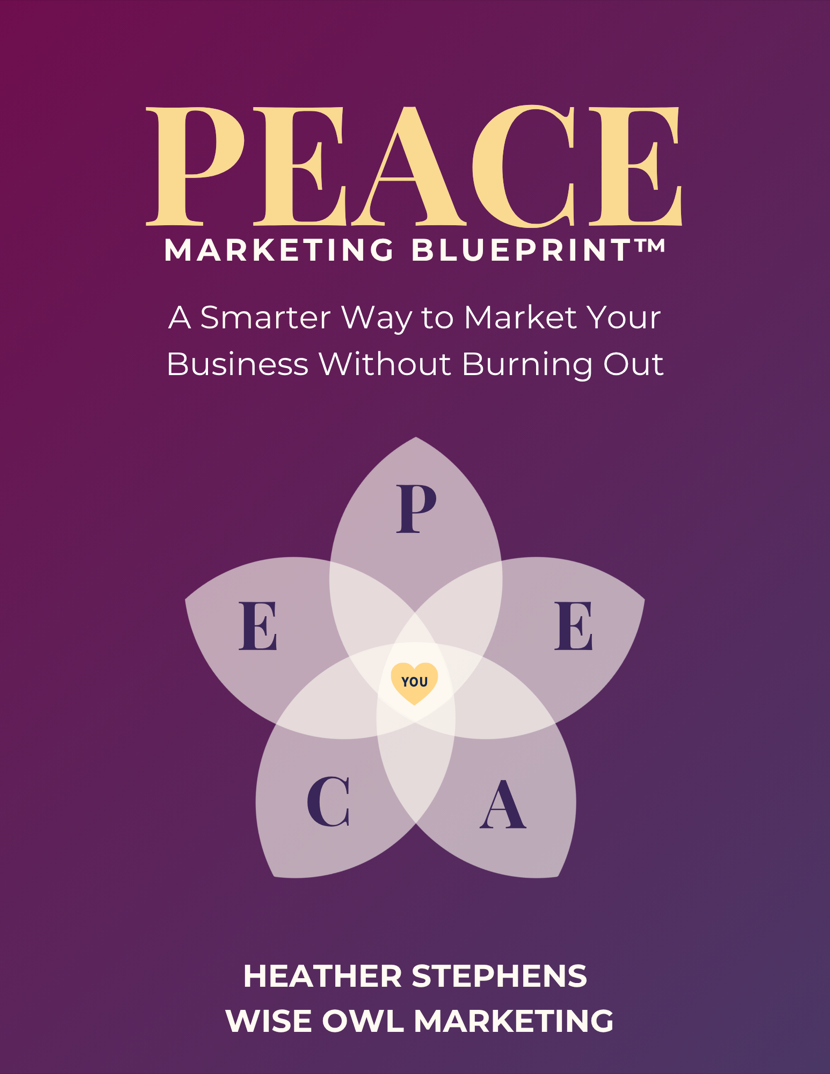

Heather C. Stephens
25+ years in marketing and 11 helping coaches and service providers get found online without burning out. Founder of Wise Owl Marketing and creator of PeacefulBiz and the PEACE Blueprint.
More about Heather →Keep reading
Get peaceful marketing ideas delivered to your inbox each week.
One practical idea at a time, written like a note from a friend who happens to know marketing. Read it and try it that afternoon.