
The Ultimate Marketing, Business, and Design Glossary for Coaches, Consultants, Experts, and Service Providers

Starting and growing a coaching, consulting, or service business can be an exhilarating journey, but it's not without challenges. When venturing into the wild world of online marketing, you may be overwhelmed and frustrated by an overload of unfamiliar terms and concepts. That's why I'm creating this glossary.
I've been compiling a list of terms I hear myself and other marketers say for the last few years. And while this list may never be complete, I've decided to launch it as it is and add to it as more words come to mind. (I want to thank Gwyn, one of my long-term clients, who has been nudging me to do this for a while.)
My goal with this glossary is to eliminate confusion and provide clarity as you navigate the marketing landscape. These essential marketing, design, and business terms will empower you with the knowledge you need to market your coaching business effectively.
Say "goodbye" to the confusion and frustration, and say "hello" to a resource that will guide you through the intricacies of online marketing.
I hope this helps you better understand the terminology that will shape your marketing strategies and move your business forward.
Please bookmark this glossary and share it with other business owners you know who might enjoy it.
Let's dive into this ever-growing glossary and set you on your way to marketing success!
Business, Design, and Marketing Glossary of Definitions & Terminology
A
Abandoned Cart Sequence: An automated series of communications, typically emails, sent to individuals who added an item to the online shopping cart but didn't complete their purchase. The sequence aims to remind and encourage them to complete the transaction.
Above the Fold: The portion of a webpage or email that is visible without scrolling, considered prime real estate for important content or calls-to-action.
Accessibility: Designing and developing websites and digital content in a way that allows people with disabilities to access, understand, and navigate them effectively.
Accounts Receivable: The outstanding payments or amounts owed to a business by its customers or clients for products or services provided. Accounts receivable represents the expected revenue to be collected in the future and is recorded as an asset on the balance sheet.
Accounts Payable: The outstanding payments or amounts a business owes its suppliers, vendors, or creditors for goods or services received. Accounts payable represents the business's liabilities and is recorded on the balance sheet until the payments are made.
Ad Creative: The visual and multimedia components used in advertising, such as images, videos, graphics, or audio, that are designed to capture attention, convey a message, and drive engagement or conversions.
AEO (Answer Engine Optimization) Optimizing your content to be featured in direct answer results rather than just traditional search listings. It’s about being quoted, not just found.
Affiliate Marketing: A performance-based marketing model where affiliates earn a commission for driving traffic or sales to a coach, consultant, or service business through their marketing efforts.
AIDA Model: A marketing framework for Attention, Interest, Desire, and Action. The AIDA model outlines the stages a customer typically goes through when interacting with a marketing message, with the ultimate goal of prompting action or conversion.
AI Overviews (AIOs) Those helpful summary boxes that appear at the top of Google search results, directly answering your question. Think of them as Google’s AI giving you the “TL;DR” version of the best answers it found. Here’s an example:

Alt Tag: An HTML attribute that provides alternative text descriptions for images on web pages, typically used to ensure accessibility and provide information to visually impaired users or in case the image fails to load.
AI SEO (Artificial Intelligence Search Engine Optimization) The practice of creating content that AI-powered search engines can easily understand and recommend. It’s like speaking AI’s language so it can connect you with people who need your help.
Algorithm The complex set of rules search engines use to decide which content to show for each search. Think of it as Google’s recipe for ranking websites – and it changes frequently!
Alt Text The descriptive text you add to images that tells search engines (and screen readers) what the image shows. Example: “Woman having breakthrough moment during coaching session” instead of just “IMG_1234.jpg”Example of Alternative Text (ALT Text) in WordPress
Analytics: The measurement, analysis, and interpretation of marketing data to evaluate performance, make informed decisions, and optimize marketing strategies.
A/B Testing: Comparing two versions of a marketing element or campaign to determine which performs better in engagement, conversions, or other metrics.
AI (Artificial Intelligence): AI is a technology that empowers machines to perform tasks commonly requiring human intelligence, like decision-making, problem-solving, and speech recognition. In marketing, AI can automate processes, analyze data, and personalize customer experiences to improve the efficiency of marketing campaigns.
Amortization: The method of distributing the expenses of an intangible asset, like a patent or copyright, over its estimated useful life. This is recorded as an expense on the income statement to reflect the gradual consumption or expiration of the intangible asset's value.
Appointment Funnel: A marketing funnel that captures and converts leads into scheduled appointments or consultations with a business or service provider.
Audit: A systematic examination or evaluation of a business's marketing efforts, processes, or assets to identify areas of improvement, strengths, weaknesses, and opportunities for optimization.
B
Backlinks: Links from external websites that direct users to a specific webpage on another website, often used to measure the website's authority, credibility, and search engine optimization (SEO) value.
Back End: The latter stages of a sales funnel, when customers who have made an initial purchase are offered additional products, upsells, or upgrades. The back end of a sales funnel focuses on maximizing customer value and generating repeat business through additional sales and increased customer lifetime value.
Balance Sheet: An accounting document that displays a company's financial status at a particular point in time. It presents details of the business's assets, liabilities, and owner's equity, revealing what the company possesses, owes, and its overall value.
Banner Ad: An advertisement displayed on a website or digital platform in the form of a banner or rectangular graphic. Banner ads are commonly used for promotional purposes and can include static images, animations, or interactive elements.
Bookkeeping: The process of recording, organizing, and maintaining financial transactions and records of a business. Bookkeeping involves tasks such as recording income and expenses, reconciling accounts, and preparing financial statements, serving as the foundation for effective financial management and decision-making.
Bounce Rate The percentage of people who visit your page and leave without clicking anything else. High bounce rates can signal that your content didn’t match what people were looking for.
Brand Advocate: A satisfied customer or enthusiastic supporter of a brand, product, or service who promotes and recommends it to others, often through word-of-mouth or social media.
Brand Awareness: The level of familiarity and recognition that a target market has with a specific brand, often measured by surveys, reach, or social media mentions.
Brand Equity: The intangible value and perception of a brand, including its reputation, recognition, customer loyalty, and overall market position.
Brand Identity: The visible and tangible elements representing and differentiating a brand, including its name, logo, colors, typography, and visual style.
Branded Email (Address): An email address that is personalized and customized to align with a business's domain name, reinforcing the brand identity and professionalism by utilizing the company's web address in the email address format.
Branding: Creating a unique and memorable identity for a coach, consultant, or service business, including its name, logo, colors, and messaging.
Branding Strategy: The comprehensive plan and approach to establish and communicate a brand's unique identity, personality, and positioning in the market.
Break-Even Point: The point at which total revenue equals total costs, resulting in neither profit nor loss. The break-even point is a key milestone for a business and helps determine the minimum level of sales or revenue required to cover all expenses and start generating profit.
Buyer Persona: A fictional personalization of an ideal customer's characteristics, needs, and behaviors found through research and data analysis.
C
Call-to-Action (CTA): A specific instruction or prompt that encourages the target market to take immediate action, such as "Download now," "Subscribe today," or "Limited time offer."
Caching: Storing website data temporarily in a cache to quickly retrieve and serve it to users. This speeds up page loading by eliminating the need to fetch data from the server for each visit.
CAN-SPAM: A law that sets standards and requirements for commercial email communications, including provisions related to sending behavior, unsubscribe mechanisms, and content disclosures.
Cash Flow: The money coming in and going out of a business through different channels like sales, investments, loans, and expenses. It plays a vital role in financial management as it measures the ability to meet financial obligations and maintain business operations.
Chatbot: A computer program or AI-powered tool that simulates human conversation, often used in customer support or lead generation to interact with website visitors or users.
Churn Rate: The rate at which customers or subscribers stop doing business with a company, often used to measure customer retention.
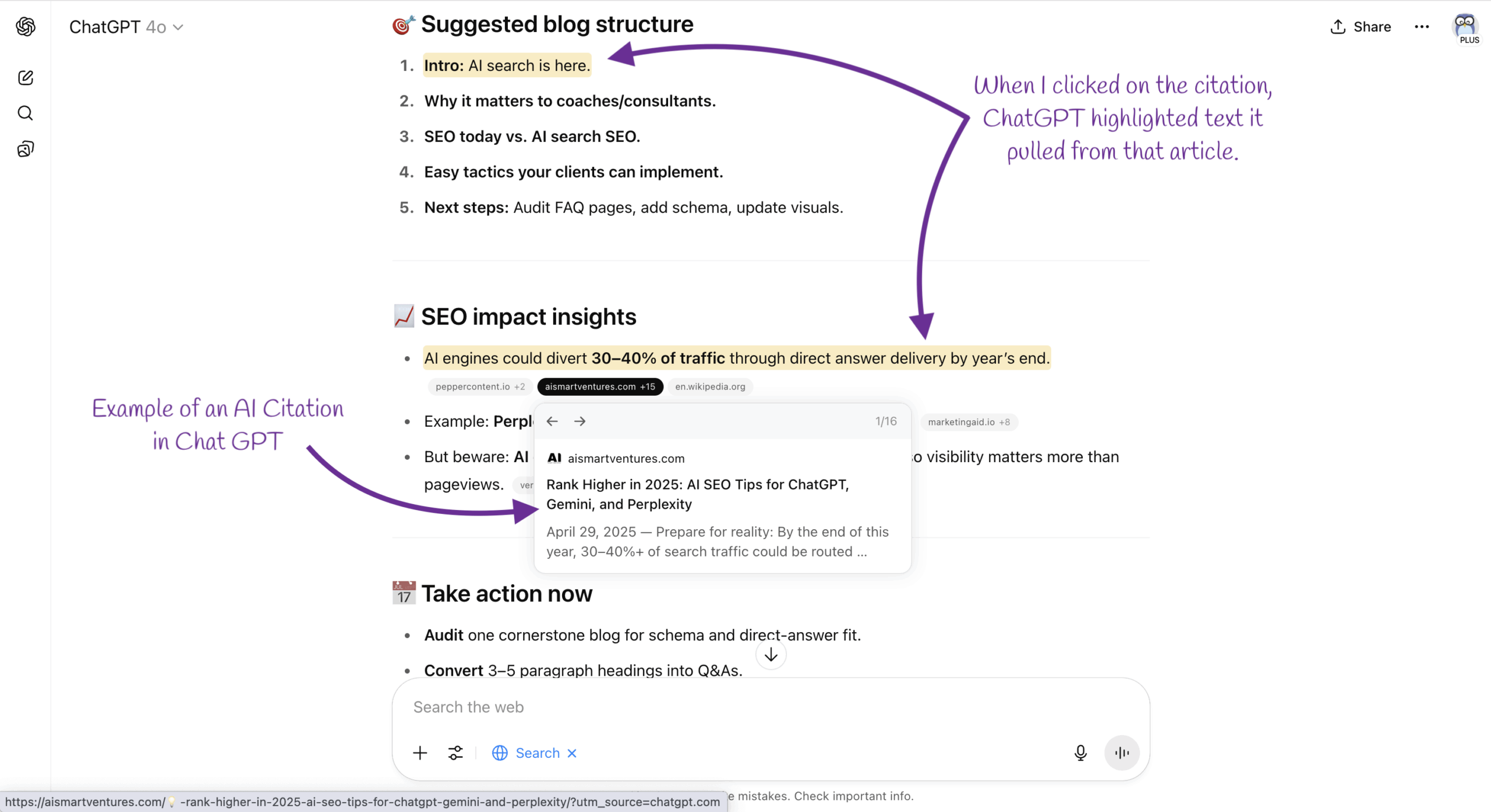
Citations When AI tools or search engines mention or reference your content as a source. It’s like being quoted in a magazine – even if people don’t click through, they see your expertise.
Click-Through Rate (CTR): The percentage of people who click on a specific link or call to action out of the total number of people who view it.
Closing: The final stage of the sales process where the salesperson seeks to secure the commitment from the prospect to purchase the product or service. Closing techniques involve overcoming objections, presenting compelling offers, and asking for a sale.
Color Palette: A set of pre-selected colors used consistently throughout a website or digital project to create a harmonious and visually appealing visual identity.
Competitive Analysis: The process of researching and evaluating competitors to gain insights into their strategies, strengths, weaknesses, and market positioning.
Compression: Reducing file size by compressing website resources before transmission. This decreases bandwidth usage and speeds up file transfer.
Content Clusters Groups of related articles all focused around one main topic. Think of it as creating a comprehensive resource library on each problem you solve for clients.
Content Delivery Network (CDN): Servers holding cached website data versions. This improves website speed by delivering content from the server closest to the user.
Content Management System (CMS): A software or platform to organize, create, manage, and publish digital content, such as websites, blogs, or online articles.
Content Marketing: The act of promoting a business through blog posts, videos, podcasts, and similar content that is distributed across social channels, search engines, email, etc., to attract and engage the target market.
Conversational Search When people search using natural language, like asking “How do I stop feeling like a fraud at work?” instead of typing “imposter syndrome tips.”
Conversion Funnel: The stages potential customers go through, from initial awareness to final conversion, typically represent a funnel-shaped diagram.
Conversion Rate: The percentage of potential customers who take a desired action, such as purchasing, subscribing to your email list or newsletter, or scheduling a discovery call or consultation.
Conversion Rate Optimization (CRO): The systematic process of making iterative improvements to a website or marketing campaign to increase the percentage of visitors who convert into customers or take desired actions.
Conversion Tracking: The process of monitoring the actions or conversions taken by users, such as form submissions, purchases, or downloads, to measure and assess marketing campaign effectiveness.
Cookies: Small text files that are stored on the user's device. They contain information about the user's browsing behavior, preferences, and interactions. Cookies help enhance the browsing experience and provide customized functionality.
Copywriting: The art and skill of writing persuasive and compelling text or content, specifically for marketing and advertising purposes.
Copy: Refers to the written content, including headlines, taglines, body text, and calls-to-action, used in marketing materials to convey messages and persuade readers or viewers.
Core Web Vitals: Google's set of specific metrics that measure user experience on your website, including how fast your page loads, how quickly it becomes interactive, and how stable the content is while loading. These metrics directly impact your search rankings, making them essential for coaches who want their websites to perform well in search results.
Cost per Acquisition (CPA): The average cost of acquiring a new customer. You can calculate this by dividing the cost of acquiring your customers by the number of customers you acquired.
Crawling How search engines scan and read your website content. Like having a really fast reader go through everything on your site to understand what it’s about.
Crawl Budget: The number of pages Google will crawl and index on your website within a given timeframe. For coaches with smaller websites, this typically isn't a concern, but understanding crawl budget helps you prioritize which pages are most important for Google to find and index regularly.
CRM Software: A tool businesses use to manage interactions with customers and potential customers. It typically includes contact management, sales automation, marketing automation, customer service and support, and analytics.
Cross-selling: Cross-selling is the practice of recommending related or complementary products or services to customers who have already purchased. Cross-selling aims to boost the average order value and improve customer experience.
CSV (Comma-Separated Values): A simple file format used for storing and exchanging structured data in a table. CSV files consist of plain text where each value is separated by a comma, allowing data to be easily imported and exported from various software applications, such as spreadsheets and databases. We use this in marketing frequently when doing tasks like uploading contacts to your email marketing software.
Customer Relationship Management (CRM): A business process for managing interactions with customers and potential customers. It involves using data analysis to better understand customer needs and behaviors and using that information to improve customer interactions and relationships. It uses software or systems to manage and track interactions and relationships with current and potential customers.
Customer Acquisition Cost (CAC): The total cost associated with acquiring a new customer, including marketing expenses, sales efforts, and any other related costs.
Customer Experience (CX): A customer's overall experience and impression throughout their interactions with a brand, encompassing all touchpoints and channels.
Customer Feedback Loop: A continuous process of gathering, analyzing, and acting upon customer feedback to improve products, services, and customer experiences.
Customer Journey: The entire process and series of buying steps a customer goes through, from initially becoming aware of the business to post-purchase activities.
Customer Lifetime Value (CLV): The total value a customer brings to a business throughout their relationship, including repeated purchases and referrals.
Customer Persona: A detailed profile or representation of an ideal customer, including demographics, interests, motivations, and behavior patterns.
Customer Retention: The strategies and activities to keep existing customers engaged, satisfied, and loyal to a coach, consultant, or service business over time.
D
Deep Linking: The practice of linking to a specific page or content within a website or mobile app, bypassing the homepage or main navigation, to provide a more targeted and relevant user experience.
Demographics: Statistical characteristics of a population or target market segment, such as age, gender, income, education, and occupation.
Depreciation: Depreciation is the decrease in an asset's value over time caused by wear and tear, obsolescence, or aging. Depreciation is an expense that gets recorded on the income statement to distribute the asset's cost over its useful life and demonstrate its decrease in value.
Digital Marketing: Marketing strategies and tactics that leverage digital channels and technologies, such as websites, search engines, social media, email, and mobile apps.
Direct Mail: Physical mail pieces, such as postcards or letters, that are sent directly to individuals' mailboxes to deliver targeted marketing messages or offers.
Direct Response Copywriting: A form of copywriting that focuses on crafting persuasive messages and calls-to-action that elicit an immediate response or action from the audience.
Discovery Call: A scheduled consultation between a potential customer and a business or service provider, typically used to explore the customer's needs, assess fit, and discuss possible solutions.
DNS (Domain Name System): A system that translates domain names into IP addresses. It's a global directory that helps computers find and connect to websites using their memorable domain names instead of complex numbers.
Domain: The unique address or URL that identifies a website on the internet, typically consisting of a name followed by a top-level domain (TLD), such as .com or .org.
Domain Registrar: A company that acts as a middleman between domain owners and the central domain registry. They also manage the reservation and registration of domain names on the internet.
Domain Authority: A metric developed by Moz that predicts the ranking potential of a domain in search engine results based on factors like backlinks, website quality, and popularity.
E
Editorial Calendar: A schedule or plan that outlines the topics, themes, and timing for content creation, publication, and distribution, typically used to manage and organize a business's content marketing efforts.
Email Marketing: Using email to communicate with the target market, nurture leads, build relationships, and promote products or services.
Email Service Provider (ESP): A company or service that offers email marketing tools, platforms, and infrastructure to send and manage email campaigns and communications.
Engagement Rate: The measure of how actively and frequently an audience interacts with a brand's content or social media posts, often expressed as a percentage.
Evergreen Funnel: A marketing funnel that operates continuously and automatically, guiding individuals through a series of steps, from initial awareness to conversion, without needing specific launch periods or time-limited promotions.
Evergreen Launch: A launch strategy that utilizes automated and ongoing marketing efforts to promote products or offers continuously, allowing for consistent sales or conversions over an extended period, regardless of specific launch dates.
Exit Pop-up: A pop-up message or offer that appears when a user attempts to leave a webpage, often used to capture their attention, offer an incentive, or encourage them to stay or take a desired action.
F
Featured Snippets The answer boxes that appear at the top of search results (position zero). When your content gets featured here, you’ve hit the jackpot! These are quotes pulled verbatim from one site and can ~43% click-through rate!

Fixed Navigation: A navigation menu or bar that remains visible and fixed in a specific position on the screen, regardless of scrolling, providing easy access to website sections and improving user experience.
Footer: The bottom section of a webpage that typically appears on every website page. It contains copyright notices, links to important pages, contact details, and sometimes additional navigation menus or supplementary content.
Funnel: A marketing and sales process that guides potential customers through the buying stages, from awareness to conversion, to maximize sales or conversions.
G
Gated Content: Content, such as articles, guides, or resources, that is made accessible to users only after they provide certain information or complete a specific action, such as filling out a form or subscribing to a newsletter.
The GDPR (General Data Protection Regulation): A set of rules created by the European Union to govern how businesses collect, process, and protect the personal data of individuals living in the EU. It places specific requirements on companies to ensure the safety and privacy of this sensitive information.
GEO (Generative Engine Optimization) Optimizing content specifically for AI tools like ChatGPT, Claude, and Gemini so they’re more likely to cite and recommend your expertise.
Geotargeting: Delivering customized marketing messages or ads to individuals based on their geographic location, targeting specific regions or areas.
Google Business Profile Your business listing on Google that shows up in local searches and maps. Essential if you work with clients in your area.
Google Search Console Free tool from Google that shows how your website performs in search results. Like getting a report card for your SEO efforts.
Graphics: Visual elements, such as illustrations, icons, or images, are used in design to enhance communication and convey information or concepts. Graphics play a vital role in creating visually appealing and engaging designs.
Grid System: A framework or structure that provides a consistent layout and alignment for website elements, enabling designers to create visually balanced and organized designs.
Guerrilla Marketing: Unconventional and low-cost marketing tactics that aim to create a memorable and impactful experience or message, often relying on creativity and grassroots efforts.
H
H1, H2, H3: HTML tags used to structure and format headings and subheadings within web pages, with H1 being the highest level and H3 being the lowest level.
Heatmap: A visual representation of user interactions with a website or web page, displaying areas of high and low engagement through color-coded overlays, helping identify user-behavior patterns.
Hello Bar: A narrow horizontal bar or banner at the top or bottom of a website, typically containing a short message, announcement, or call-to-action to capture visitors' attention and encourage specific actions or engagement.
Hero Section: The prominent and visually-impactful section at the top of a web page, often containing a compelling headline, a call-to-action, or critical information to capture visitors' attention.
Hosting: The service that provides storage space and access to websites and web pages on the internet, allowing them to be accessed and viewed by visitors.
Ideal Client: A representation of the perfect or most desirable customer for a coach, consultant, or service business based on specific criteria, needs, and preferences. The ideal client is the target audience that aligns best with a business's offerings and values, leading to a higher likelihood of satisfaction, engagement, and long-term relationships.
I
Ideal Client Avatar (ICA): A detailed and fictional representation of the perfect client, often created through research and data analysis. The ICA goes beyond demographics and includes psychographic information, such as interests, motivations, challenges, and pain points. It helps businesses understand their target audience on a deeper level and tailor their marketing efforts to effectively attract, engage, and serve their ideal clients.
Image Optimization: Optimizing images for web use, balancing file size and visual quality to ensure fast loading times and optimal performance without compromising the user experience.
Inbound Marketing: A strategy to attract and engage potential customers through valuable content, SEO, social media, and other non-intrusive techniques to build long-term customer relationships.
Income Statement: A financial statement summarizing a business's revenue, expenses, and net income or loss over a specific period. The income statement shows the business's profitability by deducting expenses from revenue, providing insights into the financial performance and viability of the business.
Indexing When search engines add your content to their database so it can appear in search results. If your content isn’t indexed, it’s invisible to searchers.
Influencer: An individual with a significant following and influence in a specific niche or industry, often used in influencer marketing campaigns to promote products or services.
Influencer Marketing: Collaborating with individuals with a significant following and influence in a specific niche or industry to promote a product or service.
Influencer Outreach: Identifying and contacting relevant influencers in a niche or industry to collaborate on promotional activities or content creation.
Infographic: A visual graphic representation of information, data, or knowledge, typically using illustrations, charts, and graphics to present complex concepts or statistics in an easy-to-understand format.
Information Architecture: The organization and structuring of website content to ensure it is logical, intuitive, and easy to navigate, enhancing user experience and findability of information.
Intent What someone is really trying to accomplish with their search. Are they looking to learn something, buy something, or find a specific website?
Internal Links: Links within a website that connect different pages or content within the same domain, often used to improve website navigation, user experience, and SEO by establishing relationships between related pages.
J
JavaScript: A programming language that adds interactive and dynamic features to websites and web applications.
Joint Venture (JV): A collaboration between two or more businesses or individuals to undertake a specific project, marketing campaign, or product launch. Joint ventures can leverage shared resources, expertise, and audiences to achieve mutual business goals.
Journey Mapping: The process of visually representing and analyzing the various stages, touchpoints, and experiences a customer follows as they interact with a brand.
JPEG: A common image file format that uses lossy compression to reduce file size while maintaining image quality. It is widely used for displaying images on websites and digital platforms.
K
Key Messaging: The core messages or value propositions that a coach, consultant, or service business wants to communicate consistently across its marketing materials and communications.
Key Performance Indicators (KPIs): Quantifiable metrics, such as website traffic, conversion rates, and revenue, used to determine the success of a marketing campaign
Keywords The words and phrases people type into search engines. For coaches, these are usually the problems your clients search for help with.
Keyword Density How often your target keyword appears in your content. Don’t obsess over this – write naturally and focus on being helpful.
Keyword Research: The process of discovering and analyzing the words and phrases people use to search for products and information. Keyword research helps businesses understand what their audience is looking for so they can tailor their marketing strategies to meet their audience's needs.
L
Landing Page: This is a webpage created specifically to collect visitor information. It is typically utilized in lead generation efforts or to promote a particular product or service.
Landing Page Optimization: Refining and improving a landing page's design, content, and user experience to maximize conversions and achieve specific marketing goals.
Launch: Introducing a new product, service, or offer to the market, involving various marketing activities and strategies to create awareness, generate excitement, and drive sales or conversions.
Lazy Load: A technique that loads website content, like images or videos, only when they become visible to the user. This improves loading speed by reducing the initial page load time.
Learning Management System (LMS): A software application or platform that enables creating, delivering, and managing online courses or educational content.
Lead Generation: Attracting and capturing potential customers' interest and contact information, typically through tactics like landing pages, forms, and lead magnets.
Lead Magnet: A free gift or opt-in incentive business that offers potential customers in exchange for their contact information. It can be useful content such as ebooks, whitepapers, webinars, or special offers such as discounts, free trials, or consultations. The purpose of a lead magnet is to attract prospects and build a mailing list that businesses can use for email marketing and lead nurturing.
Lead Nurturing: Building relationships and staying engaged with potential customers over time through targeted and personalized communication to convert them into paying customers.
Lead Scoring: Assigning a value or score to leads based on their attributes, behavior, or engagement level to prioritize and focus on high-quality information.
Licensing: Granting permission to others to use or distribute a coach's intellectual property, such as content, courses, or methodologies, in exchange for royalties or fees.
Link Tree: A single, customized landing page with multiple links to various web pages, social media profiles, or content, typically used in social media bios to provide easy access to multiple destinations.
Live Launch: A launch strategy that involves real-time promotional activities, such as webinars, live events, or social media interactions, to engage with the audience and generate immediate interest and sales.
Local SEO Optimizing your online presence to attract clients in your geographic area. Important if you offer in-person or location-specific services.
Logo: A visual symbol or mark that represents a brand or business. Logos are designed to be unique, memorable, and reflective of the brand's identity and values. They serve as a visual representation of the brand and are used across various marketing materials.
Long-form Content: Comprehensive, in-depth content that often exceeds 1,000 words. It provides detailed information, analysis, or storytelling on a particular topic, offering valuable insights to the audience.
Long-tail Keywords Longer, more specific search phrases like “confidence coaching for women entrepreneurs” instead of just “confidence coaching.”
M
Market Research: The process of collecting and evaluating data concerning the target market, competitors, and industry trends to allow a business to make intelligent marketing decisions.
Marketing Automation: Software and technology used to automate lead magnet delivery, follow-up, lead nurturing, social media scheduling, etc. This helps businesses to streamline their marketing efforts, so they can improve the effectiveness of their marketing while saving time to focus on other things.
Marketing Channel: The means or platforms used to communicate and deliver marketing messages to the target market, such as websites, social media, email, and advertising.
Marketing Collateral: The various materials and assets, both digital and print, created to support marketing and promotional efforts, such as brochures, flyers, presentations, and videos.
Marketing Funnel: A visual representation or framework that illustrates the stages individuals go through during their journey from being aware of a brand or product to becoming a customer, typically including steps like awareness, consideration, and conversion.
Marketing Strategy: A comprehensive plan or approach that outlines the goals, target audience, key messages, and tactics to be used in marketing efforts to reach clients and achieve specific business objectives.
Meta Description A summary or short preview of a webpage's content that appears in search engine results under the title. It provides a snapshot of what the page is about and can help users decide whether to click on the link and read more. Think of it as your content’s summary or movie trailer – it should make people want to click.

Meta Title (Title Tag, SEO Title, Page Title) A piece of HTML code that tells Google and your page users what the web page is about. It shows up as the text in your browser tab as well as the clickable link in Search Engine results.

Microinteractions: Small, subtle, and interactive elements within a website or user interface that provide a delightful experience in order to encourage further engagement.
Milestones: Significant points or achievements in a project that mark progress or completion of specific project phases or deliverables. Milestones serve as important checkpoints and help track project progress.
Minification: Removing unnecessary characters from website source code to reduce file size. This improves loading speed by minimizing the data transferred from server to browser.
Mobile Optimization: The process of adapting and optimizing websites, content, and user experiences to ensure they are accessible and functional on mobile devices.
Mockup: A static visual representation or design draft that showcases the appearance and layout of a website, landing page, or other digital assets. Mockups provide a preview of how the final design will look and allow for feedback and revisions before implementation.
N
Native Advertising: Paid advertising that matches the form, style, and function of the platform or medium it appears on, making it less disruptive and more integrated.
Niche: A specialized segment or subset within a larger market characterized by a distinct set of customer needs, preferences, or interests. By focusing on a niche, businesses can differentiate themselves from competitors and build expertise and credibility within a specific area, allowing for more targeted and effective marketing efforts.
Nurture Sequence: A series of planned and automated communications, such as emails or messages, designed to build relationships and engage with leads or customers over time, providing valuable information and guiding them through the customer journey.
O
Objection: A concern, hesitation, or resistance expressed by a prospect or customer during the sales process. Objections allow the salesperson to address concerns and give more information to move the prospect closer to making a purchase.
Off-Page Optimization: Improving a website's search engine ranking by focusing on activities outside the website. This includes building backlinks, promoting content on social media, and engaging with online communities to increase brand awareness and drive traffic. The goal is to improve visibility and authority for increased organic traffic and higher conversions.
Omnichannel Marketing Strategy: A strategy that ensures a seamless and consistent brand experience across multiple channels and touchpoints, both online and offline, to enhance customer engagement.
On-page SEO All the optimization you do directly on your website – titles, headings, content, images, etc. The stuff you have complete control over.
Organic Search The free search results (not ads) that appear when someone searches. This is where SEO efforts pay off.
On-Page Optimization: (Same as On-Page SEO.) Optimizing individual web pages with relevant keywords, meta tags, headings, and content to improve their visibility and search engine rankings.
One-Page Scrolling Site: A website design approach where all the content is presented on a single web page that users navigate by scrolling vertically, eliminating the need for traditional page reloads or multiple pages.
Online Business Manager (OBM): A professional who oversees and manages various aspects of an online business, including operations, team management, project management, and strategic planning, to ensure the smooth running and growth of the business.
Open Rate: The percentage of recipients who open an email out of the total number of emails delivered. Open rate is a metric used to measure an email campaign's effectiveness and engagement level.
Opt-in: The process or action of voluntarily subscribing or providing consent to receive communications, such as emails or newsletters, from a business or organization.
Order Bump: A strategy where businesses offer customers an additional product or service at checkout, typically at a discounted rate. This can increase the overall value of the purchase for the customer and generate additional revenue for the business.
Organic Content: Content created and shared without paid promotion or advertising, aiming to attract and engage the target audience naturally through its quality and relevance.
Organic Reach: The number of people who see a brand's content or posts through unpaid, natural means, such as appearing in their social media feeds or search results.
Overhead: The ongoing expenses or costs incurred by a business that are not directly tied to the production or delivery of specific goods or services. The overhead typically includes expenses like rent, utilities, salaries, and office supplies.
P
Page Builder: A plugin or software that simplifies designing and customizing web pages by providing a visual interface and pre-built elements, enabling users to create complex page layouts without coding knowledge.
Page Experience: Google's ranking factor that measures how users experience interacting with your web page, including loading speed, mobile-friendliness, safe browsing, and visual stability. Good page experience signals help your coaching website rank higher in search results by showing Google that visitors have a positive experience on your site.
Parallax Effect: A visual effect created by moving background elements at a different speed than the foreground, resulting in an engaging and immersive scrolling experience on a website.
Pay-per-Click (PPC): An online advertising model where an advertiser pays for each person who clicks on their ad. This model is commonly used in search engines and social media platforms to drive website or landing page traffic.
Pay-per-View (PPV): An advertising model where advertisers pay a fee each time their video or content is viewed, often used in video advertising or streaming services.
Personalization: Tailoring marketing messages, content, and offers to individual consumers based on their preferences, behavior, or demographic information to enhance relevance and engagement.
Pop-up: A graphical user interface element that appears suddenly and overlays the main content of a webpage, often used to display offers, promotions, or calls-to-action.
Portable Document Format (PDF): A file format used for presenting and exchanging documents across different platforms and devices. PDF files retain the formatting, layout, and fonts of the original document, making them widely compatible and easily shareable. They are commonly used for digital documents, such as reports, ebooks, and forms.
Portable Network Graphics (PNG): A popular image file that is used for displaying images on websites and digital platforms. PNG files preserve the quality of images while offering support for transparent backgrounds and a wide range of colors.
Privacy Policy: A statement or document that discloses how a company collects, uses, stores, and protects the personal information of its website visitors or customers.
Project Scope: The defined boundaries and deliverables of a project, outlining what will be included and excluded from the project's work. The scope helps establish project expectations and provides a basis for project planning and control.
Profit: The financial gain or positive difference between revenue earned and expenses incurred by a business. Profit represents the amount left after deducting all costs from the total income and is a key indicator of business performance and success.
Profit Margin: The percentage of revenue that represents profit after deducting all expenses. Profit margin measures profitability and efficiency, indicating how well a business controls costs and generates profits from its sales.
Project Kickoff: The initial phase of a project where stakeholders and project team members come together to start the project. The kickoff involves discussing project goals, scope, expectations, roles, and responsibilities.
Project Status Report: A document or communication that provides an overview of the project's progress, accomplishments, issues, and upcoming activities. Project status reports inform stakeholders about project performance and help identify areas requiring attention.
Psychographics: The study and categorization of people based on their attitudes, beliefs, values, interests, and lifestyles, used in marketing to understand and target specific consumer segments with tailored messages and offerings.
Q
Qualified Lead: A potential customer or prospect who has met specific criteria and has shown interest or potential to become a paying customer.
Market Qualified Lead (MQL): A potential customer or lead who has shown a certain level of interest or engagement with a business's marketing efforts, indicating that they may be more likely to become a customer.
Sales Qualified Lead (SQL): A potential customer or lead who has been deemed by the sales team as ready for direct sales engagement.
Query What someone types into a search engine. Understanding common queries in your niche helps you create content people are actually looking for.
R
Ranking Where your content appears in search results. Position 1 is the top result, and most people don’t look past the first page (positions 1-10).
Referral Marketing: A marketing strategy that encourages and incentivizes customers or advocates to refer others to a business. Referral marketing leverages word-of-mouth recommendations to acquire new customers and build trust.
Remarketing: Reaching out to individuals who have previously engaged with a brand or website, often through targeted ads, to re-engage and convert them.
Re-engagement Campaign: A targeted marketing campaign to reconnect with inactive or disengaged leads or customers, often using personalized messaging or offers to encourage them to re-engage with the brand or take a desired action.
Responsive Design: A web design approach ensures websites adapt and display correctly on different devices and screen sizes, providing optimal user experience and usability across desktops, tablets, and smartphones.
Retained Earnings: The portion of a business's net income that is kept and reinvested in the company rather than distributed to shareholders as dividends. Retained earnings accumulate over time and contribute to the equity and financial stability of the business.
Retargeting: A marketing strategy that displays ads or content to individuals who have previously interacted with a coach, consultant, or service business, encouraging them to re-engage or convert.
Return on Ad Spend (ROAS): A metric that measures the revenue generated from advertising campaigns relative to the amount spent on advertising.
Return on Investment (ROI): The measure of the profitability or effectiveness of a marketing campaign or initiative relative to the investment made.
Return on Marketing Investment (ROMI): A metric that measures the return on investment specifically for marketing activities, evaluating the effectiveness and profitability of marketing campaigns.
S
SAAS (Software as a Service): Software delivered over the internet, eliminating the need for local installation. Users access and use the software through a web browser, paying for it on a subscription basis.
Sales Forecasting: Estimating future sales revenue or volume based on historical data, market trends, and other factors. Sales forecasting helps businesses plan and make informed decisions regarding resource allocation, inventory management, and revenue projections.
Sales Collateral: Printed or digital materials, such as brochures, sales sheets, presentations, and case studies. It is used by salespeople to provide information, educate prospects, and support the sales process. Sales collateral helps communicate the value and benefits of products or services.
Sales Cycle: The period of time or series of steps required to complete a sale. The sales cycle can vary in length depending on the complexity of the product or service being sold and the nature of the target market.
Sales Funnel: A specific type of marketing funnel that focuses on guiding potential customers through the steps of the purchasing process, from initial interest to making a purchase, to maximize sales and conversions.
Sales Pipeline: A system that visually represents and helps manage various sales process stages. It provides a clear overview of the progress of prospects, from initial contact to closing the deal.
Sales Quota: The specific sales target or goal assigned to an individual salesperson, team, or territory within a given period. Sales quotas help drive performance, measure progress, and provide a basis for evaluating sales effectiveness and success.
Sales Target: A specific goal or objective set for sales teams or individuals to achieve within a given period. Sales targets are typically based on revenue, units sold, or other measurable metrics and provide focus and motivation to drive sales performance.
Schema Markup Special code that helps search engines understand your content better. It’s like adding labels to help AI tools know exactly what information you’re providing.
Scrubbing Your List: Careful review and removal of inactive or unengaged email addresses from your subscriber list to maintain a clean and responsive audience, improve deliverability, and optimize email marketing efforts.
Search Engine Results Page (SERP) The page you see after searching for something. Includes organic results, ads, featured snippets, and other elements.
Search Intent: The underlying goal or purpose behind what someone types into a search engine - whether they want information, are looking to buy something, want to visit a specific website, or are researching local services. Understanding search intent helps coaches create content that matches what their ideal clients are actually looking for.
Segmenting: To improve marketing campaigns and engagement by dividing your target audience or subscriber list into smaller groups based on shared characteristics, behaviors, or preferences. This allows for personalized and targeted communication.
SEO (Search Engine Optimization) The practice of optimizing your website and content to rank higher in search engine results. The goal is helping the right people find you.
SERP Features Special elements in search results like featured snippets, AI overviews, local business listings, and image carousels.
Short-form Content: Concise and brief content that delivers information or engages the audience in a condensed format. Short-form content is commonly used on social media, in email subject lines, or for quick updates.
Sidebar: A vertical column or section next to the main content area of a webpage, often containing additional information, navigation menus, widgets, or supplementary content.
Search Engine Optimization (SEO): Making changes to a website or content to improve its visibility and ranking in search engine results. This ultimately leads to an increase in organic traffic.
SEO Title: The title tag or headline is the clickable link that appears in search engine results. It summarizes the webpage's content and is optimized with relevant keywords to improve search engine visibility. This helps attract users to click on the link.
Social Listening: Monitoring and analyzing social media channels to gain insights into brand mentions, customer sentiment, industry trends, and competitor activity.
Social Media Engagement: The level of interaction, such as likes, comments, shares, and mentions, that a coach, consultant, or service business receives on social media platforms.
Social Media Advertising: The practice of promoting products, services, or content through paid advertisements on social media platforms (for example, but not limited to, Facebook, Instagram, Twitter, and LinkedIn). Businesses can target audiences based on interests, behaviors, and demographics to generate leads, build brand awareness, and drive sales.
Social Media Marketing: Using various platforms to advertise products or services, interact with audiences, and increase traffic or conversions. It involves creating engaging content, running targeted ads, and building relationships to boost brand awareness and drive business.
Software Integration: Connecting different software tools or platforms to seamlessly work and share data. The integration enables automation, improves efficiency, and enhances the overall functionality of a coach's digital ecosystem.
Stakeholder: Any individual, group, or organization that has an interest or involvement in the project and can influence its outcome. Stakeholders can include project sponsors, team members, clients, or external parties impacted by the project.
Sticky Menu: A navigation menu that remains fixed or "sticks" to the top or side of a webpage as the user scrolls, providing easy access to the menu options regardless of the page position.
T
Target Audience: The specific group of individuals a business aims to reach and engage with its products or services. Understanding the target audience helps businesses tailor their marketing strategies and messages to effectively connect with and meet the needs of their desired customers.
Target Keyword The main search term you want a specific piece of content to rank for. Choose based on what your ideal clients actually search for.
Tax Deductions: Expenses or costs that can be subtracted from a business's taxable income, reducing the amount of income subject to taxation. Tax deductions are typically related to legitimate business expenses incurred in the ordinary operation of a business and can help reduce the overall tax liability.
Terms of Service: A legal agreement or contract that outlines the rules, terms, and conditions under which a user may access and use a website, product, or service.
Thought Leadership: Establishing oneself or a brand as an authority and expert in a specific field, often achieved through content creation, speaking engagements, and industry contributions.
Traffic The number of people visiting your website. Quality matters more than quantity – you want the right people, not just lots of people.
Two-step Opt-in: A two-step process where a user is first presented with a smaller, less invasive call-to-action, such as a button or link, which leads to a secondary opt-in form or page. This approach is used to increase conversions by reducing initial commitment and perceived friction.
Typography: The selection and arrangement of fonts, typefaces, and text formatting in web design, which influences the readability, visual appeal, and overall aesthetics of a website.
U
Usability Testing: The process of evaluating a website or digital product by testing it with users to identify usability issues, gather feedback, and make improvements to enhance the user experience.
Unsubscribe Rate: The unsubscribe rate is the percentage of subscribers who choose to opt out of receiving emails from a business. This metric measures the level of disinterest or dissatisfaction among the audience and evaluates the effectiveness of email campaigns and subscriber retention strategies.
User Experience (UX): The overall experience and satisfaction that a user has when interacting with a website, application, or digital product, encompassing usability, design, and functionality.
User Intent: User intent refers to the underlying motivation or goal that drives a user's search or interaction with a website. Understanding user intent is crucial for creating and optimizing website content that meets the needs and expectations of users.
UI (User Interface): The visual and interactive components of a digital product that users interact with, making it user-friendly and intuitive. It includes design, layout, and features that enable interface navigation, interaction, and action.
Upsell: Offering a higher-priced or additional product or service to a customer who has already purchased. Upselling aims to increase the customer's lifetime value and revenue generated per transaction.
User-Generated Content (UGC): Any content such as reviews, testimonials, social media posts, or blog comments created and shared by consumers or users about a particular product or service.
V
Value Proposition: The unique combination of benefits, solutions, or advantages that a product or service offers to customers, addressing their needs, pain points, or desires. A strong value proposition communicates why a customer should choose a particular product or service over alternatives.
Video Marketing: Using videos to promote brands, products, or services. It aims to increase brand awareness, drive traffic, and convert leads into customers by delivering valuable content through a powerful visual medium.
Viral Content: Highly shareable and attention-grabbing content, such as videos, memes, or articles, that rapidly spreads and gains significant exposure through social sharing and word-of-mouth.
Viral Marketing: Marketing techniques that aim to create and promote content that quickly spreads and gains significant attention through online sharing and word-of-mouth.
Virtual Assistant (VA): A remote professional who provides administrative, creative, or technical support to individuals or businesses remotely, typically assisting with tasks such as scheduling, research, email management, and social media management.
Visual Editor: A user-friendly tool or interface that allows non-technical users to create and edit website content visually, typically by providing drag-and-drop functionality and real-time previews.
Visual Hierarchy: The arrangement and prioritization of design elements based on their importance and significance. Visual hierarchy uses factors like size, color, contrast, and positioning to guide the viewer's attention and communicate the relative importance of different elements.
Voice Search When people use Siri, Alexa, or Google Assistant to search by speaking instead of typing. These searches tend to be longer and more conversational.
W
WAAS (Website as a Service): A comprehensive website solution that provides all the necessary components for building, managing, and hosting a website. It includes templates, content management systems, hosting, and support. Users can create and maintain websites without extensive technical knowledge.
Webinar: A live or pre-recorded online seminar or presentation allowing real-time interaction, knowledge sharing, and engagement with participants from different locations.
Web Analytics: The measurement, collection, analysis, and reporting of website data to understand and optimize its performance, user behavior, and marketing effectiveness.
White Paper: A comprehensive and authoritative report or guide that addresses a specific issue, problem, or topic, often used to showcase expertise and thought leadership.
Whitespace: The empty or negative space between elements in a design, which helps improve readability, visual hierarchy, and overall aesthetics by reducing clutter and increasing focus.
Wireframe: A basic visual representation or blueprint that outlines the structure, layout, and functionality of a web page or user interface, focusing on content placement and overall design framework.
Widgets: Small modules added to different areas of a webpage, such as a sidebar or footer, providing specific functionality or displaying content.
WordPress Plugin: An add-on or extension that enhances the functionality of a WordPress website, allowing users to easily integrate features, such as contact forms, SEO optimization, social media sharing, and more.
WordPress Theme: A collection of files and templates that determine the appearance and layout of a WordPress website. Themes allow users to change the design and style of their site without modifying the underlying code.
Workflow: A sequence or series of defined steps, tasks, or processes that outline the execution and management of specific activities within a business or marketing operation.
Z
Zero-click Search When someone gets their answer directly from the search results page without clicking through to any website. This is why citations and mentions are becoming more important than just clicks.
Bookmark this Glossary to keep it handy as you grow your business, master your marketing, and scale your systems!
My goal is to provide you with a comprehensive list of terms that will empower you to navigate the marketing landscape confidently.
I understand that marketing your coaching business can be overwhelming at times. That's why I'm here to help!
If you're feeling stuck, confused, or simply want some guidance on how to level up your marketing efforts, we invite you to book a free 15-minute clarity call with me. Schedule your call here.
During this call, we'll discuss your specific marketing challenges, answer any questions you have, and I'll provide personalized recommendations to help you reach your goals.
Don't let confusion or frustration hold you back from realizing the full potential of your coaching business. Take the next step towards marketing success by booking your clarity call today. Together, we'll transform your website, funnel, and online marketing strategies and set you on a path to achieving your coaching goals.
Let's talk! Here's the link to schedule your free 15-minute clarity call.
I can't wait to meet you and help you reach your business goals!
Happy marketing!
🙂 Heather