
Last Updated: January 2026. This post contains affiliate links.
Marketing for coaches doesn’t have to feel like a second full-time job. If you’ve spent any time in the online business world, you’ve probably heard the same exhausting advice on repeat: post daily, go viral, be everywhere, dance on TikTok, show up “consistently” (which somehow means constantly).
And somewhere in the middle of all that noise, you’re wondering: Didn’t I start this business for freedom?
I get it. I’ve been in marketing since 2005, built over 350 websites, and spent years believing that more hustle meant more success. Then life happened. Hospital stays. Family emergencies. Seasons where I simply couldn’t show up online every day.
Here’s what I discovered: my business didn’t collapse. In fact, when I stopped posting on social media entirely (as an experiment that’s now lasted over a year), my organic search traffic grew 170% year over year. My business actually expanded while I was barely posting anything.
That experience changed everything I believed about marketing for coaches. There’s a different way to grow your coaching business. One that doesn’t require sacrificing your wellbeing, your family time, or your sanity. One built on systems instead of constant hustle.
This guide is that different way.
Discover What’s Holding You Back in Your Marketing
Before we dive into today’s strategies, it helps to know where YOU naturally thrive in marketing, and where you might be overcomplicating things.
Take the Peaceful Marketing Assessment
This free 5-minute assessment reveals your unique marketing profile and shows you exactly where to focus your marketing efforts based on your strengths, your business stage, and your capacity.
You’ll discover:
- A personalized action plan based on your results
- Your natural marketing strengths (so you can lean into them)
- Where you’re likely overcomplicating things
- The ONE area to focus on next for the biggest impact
TL;DR: Key Takeaways
- Hustle is Optional: You don’t have to be “always on” or dance on TikTok to grow; sustainable marketing is built on systems that work even when you can’t.
- The PEACE Framework: Growth comes from Protecting your peace, Expressing your message clearly, Attracting clients magnetically, Connecting authentically, and Earning sustainably.
- Prioritize Your Website: Your website is the digital home base that you own; unlike social media, it works 24/7 to build authority and attract leads via evergreen SEO.
- Focus on Specificity: Successful niche definition means speaking directly to one person’s urgent problem rather than trying to help everyone with everything.
- Leverage High-Value Lead Magnets: Use interactive tools like quizzes or specific templates to create lead magnets that solve immediate problems and build your email list with an engaged audience.
- Permission to Step Back: If a channel like social media drains your energy, you have permission to stop using it and focus on high-impact strategies like referrals and partnerships.
Table of Contents
Why Marketing for Coaches Needs a Complete Rethink
Here’s what nobody tells you about traditional coaching business marketing advice: it was designed for people with teams, unlimited time, and an appetite for being “always on.” It wasn’t designed for established coaches who already have clients, already know their craft, and simply want a sustainable way to keep their pipeline full.
The problem isn’t that you don’t know enough tactics. You’ve probably bought courses, downloaded templates, and followed the launch playbooks. The problem is that none of it works when life gets in the way. And life always gets in the way eventually.
What you actually need is marketing that works even when you can’t. Systems that keep running during hard seasons. Permission to do less, but do it better.
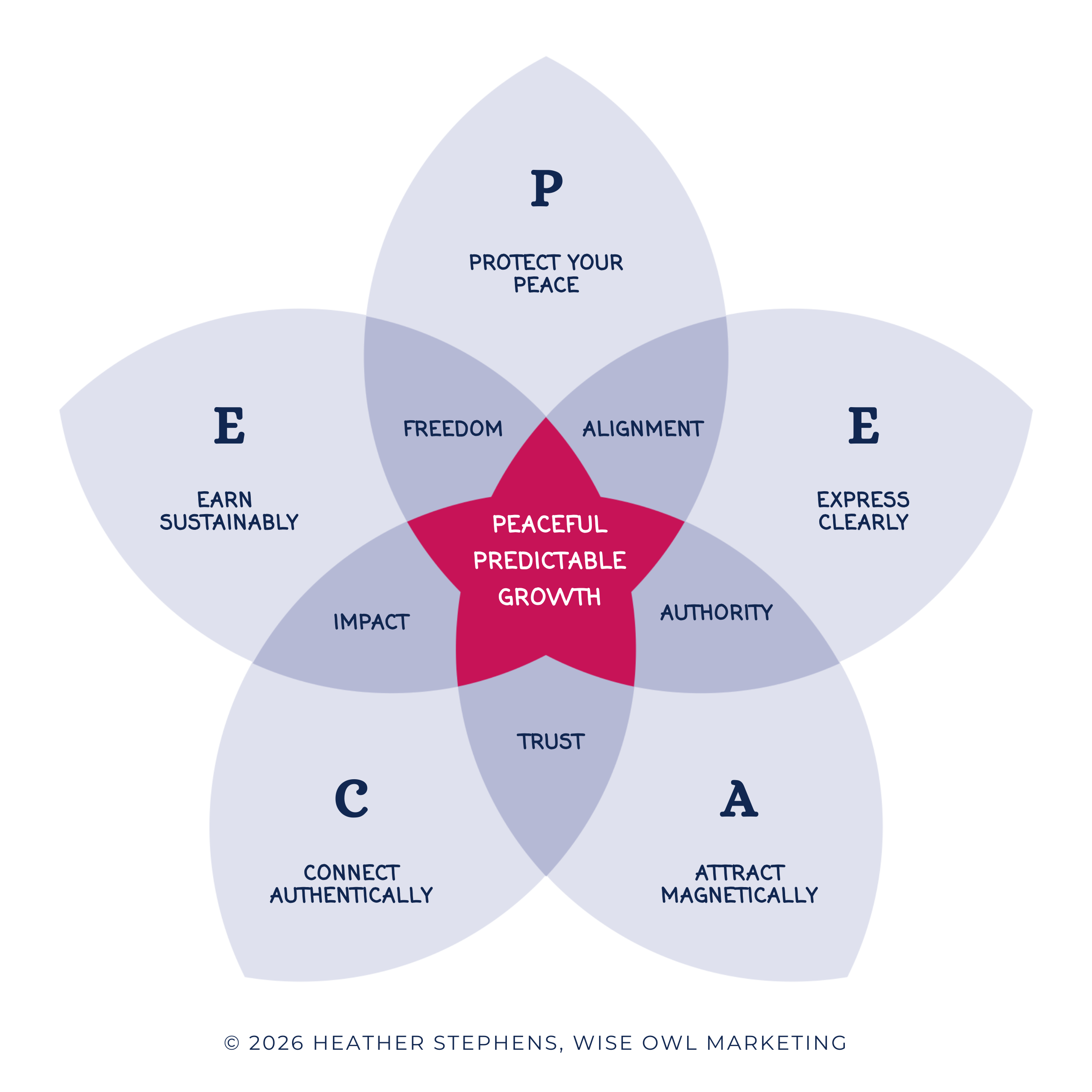
I call this approach the PEACE Framework:
Protect Your Peace — Build systems that work even when you can’t constantly show up.
Express Clearly — Communicate your message with clarity, not complexity.
Attract Magnetically — Draw ideal clients to you rather than chasing them.
Connect Authentically — Build real relationships, not transactional ones.
Earn Sustainably — Create revenue without sacrificing your wellbeing.
Let’s break down how to actually implement this in your coaching business.
How to Define Your Coaching Niche and Ideal Client
Before you create a single piece of content or build any system, you need absolute clarity on two things: what you do and who you do it for. Coaching niche definition isn’t just good marketing advice. It’s the foundation that makes everything else easier.
When your niche is crystal clear, marketing stops feeling like shouting into the void. Your messaging becomes magnetic because it speaks directly to specific people with specific problems.
Finding Your Sweet Spot
Your niche lives at the intersection of three things: what you’re genuinely good at, what you actually enjoy doing, and what people will pay for.
If you’re struggling to define this, ask yourself: What transformation do my best clients experience? What problems do I solve better than anyone else? What topics could I talk about for hours without getting bored?
Don’t fall into the trap of trying to serve everyone. The coaches who struggle most with marketing are often the ones with the broadest positioning. “I help people live their best lives” is forgettable. “I help overwhelmed working moms create morning routines that actually stick” is specific enough to attract the right people.
Creating an Ideal Client Profile
Your ideal client isn’t just a demographic. They’re a real person with real struggles, fears, and desires. Go beyond age and income level. What keeps them up at night? What have they already tried that didn’t work? What would success look like for them?
When you understand your ideal client deeply, your messaging practically writes itself. You’ll know exactly what to say because you’ll be speaking their language, addressing their actual concerns, and offering solutions to problems they’re actively trying to solve.
Messaging for Connection, Not Complexity
Here’s a mistake I see constantly: coaches making their messaging too complicated because they’re trying to sound impressive. Your marketing shouldn’t require a decoder ring.
Say what you do in plain language. Use the words your clients actually use to describe their problems. If someone can’t understand what you offer within five seconds of landing on your website, your messaging needs work.
Website Design for Coaches: Building Your Digital Foundation
Your website is your home base. It’s the one piece of digital real estate you actually own. Social media platforms change algorithms, shut down features, and could disappear tomorrow. Your website works for you 24/7, attracts clients while you sleep, and builds authority over time.
Why Your Website Matters More Than Social Media
Think of your website as your best salesperson. It should clearly communicate who you help, what problems you solve, and how to take the next step. A confusing website doesn’t just hurt your credibility. It actively costs you clients.
I’ve built over 350 websites, and the ones that convert best share common traits: clear messaging above the fold, obvious calls to action, testimonials or social proof, and a simple path from visitor to lead.
If you’re a therapist or counselor, I’ve written a detailed guide on website design for therapists that covers specific considerations for your profession.
Must-Have Pages for Your Coaching Website
You don’t need a complicated site with dozens of pages. Start with the essentials:
- A home page that immediately communicates your value
- An about page that builds connection and credibility
- A services page that clearly explains what you offer
- A contact page that makes it easy to reach you
As you grow, you might add a blog (more on that shortly), a resources page with lead magnets, and case studies or detailed testimonials. But don’t let perfectionism keep you from launching. A simple, clear website beats an elaborate, confusing one every time.
SEO Basics That Actually Matter
Search engine optimization sounds technical, but the basics are straightforward. Create helpful content that answers questions your ideal clients are asking. Use the words they would actually type into Google. Make sure your site loads quickly and works well on mobile devices.
The beautiful thing about SEO is that it compounds over time. I have blog posts from 2016 that still generate clients today. That’s the power of evergreen content marketing for coaches. Create it once, benefit for years.
Lead Generation for Coaches: Evergreen Strategies That Work
Here’s where most coaches get marketing backwards. They think lead generation for coaches means being everywhere, posting constantly, and chasing people. But the most sustainable approach is actually about attraction, not pursuit.
Lead Magnets That Actually Convert
A lead magnet is something valuable you give away for free in exchange for an email address. The key word there is valuable. Generic checklists that took you five minutes to create won’t cut it.
The best lead magnets solve a specific, urgent problem for your ideal client. They should be easy to consume (nobody wants to wade through a 50-page ebook) and give a quick win that builds trust in your expertise.
Think quizzes that provide personalized results, templates they can use immediately, short guides that solve one specific problem, or resource lists that save them hours of research. Interactive assessments like quizzes can convert at 30-50% compared to 15-30% for static PDFs.
If you need inspiration, I’ve compiled over 100 lead magnet ideas for coaches that actually work. For wellness professionals specifically, check out lead magnet ideas for health coaches.
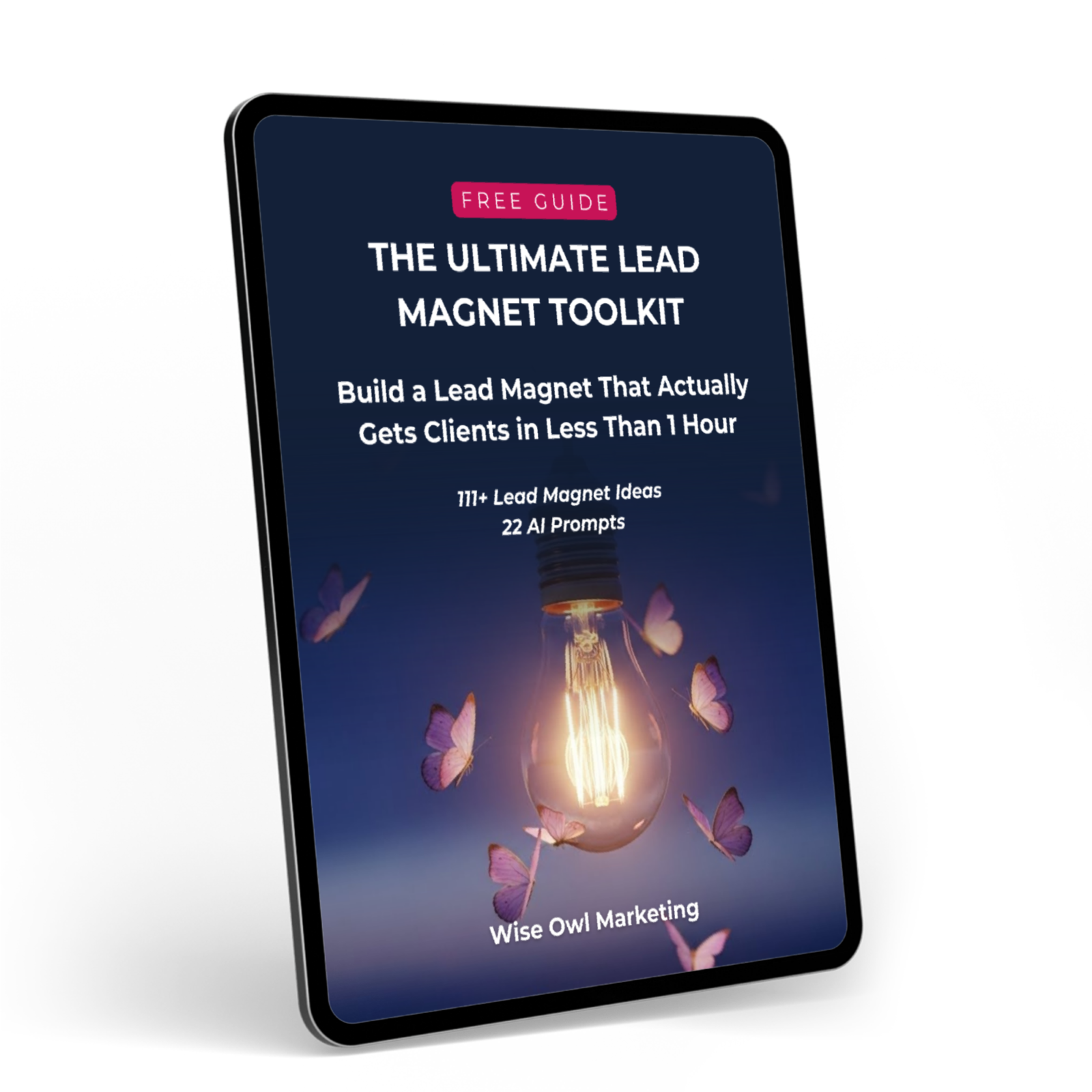
Free Guide:
The Ultimate Lead Magnet Toolkit
Everything you need to create an irresistible lead magnet and start attracting your dream clients in minutes, not days.
- 111+ proven lead magnet ideas with fill-in-the-blank title formulas
- 22 AI prompts to create your content fast (just copy, paste, and customize)
- The Lead Magnet Matrix: know exactly which type works for YOUR goals
Referral Marketing: The Most Underrated Strategy
Want to know where most of my best clients come from? Referrals. People who heard about me from someone they trust arrived already warm because a friend vouched for my work.
Referral marketing for coaches isn’t complicated. Do excellent work, ask happy clients if they know anyone who might benefit from what you offer, and make it easy for people to recommend you. You can create simple referral systems with incentives, or simply make a habit of asking for introductions.
The clients who come through referrals are often easier to work with, more trusting from the start, and more likely to refer others themselves. It’s a virtuous cycle that costs you nothing but doing great work.
Partnerships and Collaborations
Collaborations expand your reach without requiring you to build everything yourself. Guest on podcasts, write for other people’s blogs, co-host workshops with complementary service providers, or participate in bundle promotions.
The key is finding partners whose audiences overlap with yours but who aren’t direct competitors. A life coach and a nutritionist might serve similar clients. A business coach and a website designer often refer clients to each other. Look for those natural fits in your network.
Email Marketing for Coaches: Building Relationships That Convert
Getting someone on your email list is just the beginning. The magic happens in what comes next: nurturing those leads until they’re ready to become clients.
Beyond Newsletters: Email Strategy That Works
Email marketing for coaches is one of the most valuable skills you can develop. Your email list is the one audience you actually own. No algorithm can take it away from you.
But here’s what matters: email isn’t just about sending newsletters. It’s about building relationships over time. The people on my email list stay subscribed an average of 754 days before they purchase. That’s over two years of relationship building, value providing, and trust earning before they become clients.
Your email strategy should include welcome sequences that orient new subscribers, regular value-adding content that keeps you top of mind, and occasional invitations to work with you. The ratio should lean heavily toward giving value. If every email is a sales pitch, people will tune out fast.
For a deeper dive into whether email or social platforms deserve your attention, read my comparison of email marketing vs social media.
Content Marketing for Coaches: Publish Once, Repurpose Often
Here’s a content marketing for coaches strategy that won’t burn you out: create one substantial piece of content per week (like a blog post), then repurpose it across other channels.
That blog post becomes an email to your list. It becomes a LinkedIn post. It becomes a podcast episode or YouTube video if those channels make sense for you. You’re not creating new content constantly. You’re taking one idea and expressing it in different formats.
This approach is sustainable. And because blog content is searchable and evergreen, it continues working for you long after you publish it.
Social Proof That Builds Authority
Testimonials, case studies, and success stories are some of your most powerful marketing assets. They let other people do your selling for you.
Make collecting testimonials a regular part of your client offboarding process. Ask specific questions that prompt detailed responses: What was your situation before we worked together? What changed? What would you tell someone considering this work?
Feature these prominently on your website, include them in your email sequences, and reference them when relevant in your content. Nothing builds trust quite like hearing from someone who was once in your potential client’s shoes.
Social Media Marketing for Coaches: A Permission-Giving Approach
I want to be clear about something: social media marketing for coaches is optional. It can be a useful tool, but it’s not required for a successful coaching business. I’m living proof of that.
You Have Permission to Step Back
If social media energizes you and you enjoy it, great. Use it strategically. Choose one or two platforms where your ideal clients actually spend time, and show up there in whatever way feels sustainable.
But if social media drains you, stresses you out, or feels like a performance you’d rather skip? You have permission to step back. Focus on the strategies that actually work for you: SEO, email marketing, referrals, partnerships. Build systems that don’t require you to be online every day.
Paid Advertising for Coaches: When It Makes Sense
Paid advertising for coaches can accelerate your results, but it’s not where I’d recommend starting. Ads amplify what’s already working. They’re not a substitute for a clear offer, compelling messaging, and a website that converts.
Once you have those foundations in place and you’re ready to scale, paid ads can help you reach more people faster. Start small, test different approaches, and never spend more than you can afford to lose while you’re learning.
Marketing Automation Tools for Peaceful Growth
One of the best investments you can make is building systems that run without your constant attention. Marketing automation tools let you deliver value, nurture relationships, and stay top of mind even when you’re not actively working.
Recommended Tools for Coaches
You don’t need dozens of tools. You need a few that work well together. At minimum, you’ll want:
Email Marketing Platform: ConvertKit, Flodesk, or ActiveCampaign for automated sequences and newsletters.
Calendar Scheduling: Calendly, Acuity, or my favorite, TidyCal, so clients can book calls without back-and-forth emails. Read more: The Ultimate Guide to Appointment Scheduling
Lead Magnet Delivery: Your email platform can handle this, or use a dedicated tool like LeadPages for simple landing pages. Read more: How to Deliver and Promote Your Lead Magnet
CRM (as you grow): Dubsado, HoneyBook, or a simple spreadsheet to track client relationships and follow-ups. Read more: The Coaches Guide to CRM Systems
As you grow, you might add more sophisticated automation for your marketing funnels. But start simple. The best system is the one you’ll actually use.
If you want the full breakdown, I’ve written about how to automate your coaching business with specific workflows.
Building Systems That Support You
The goal isn’t “set it and forget it.” It’s “set it and review it.” Your automation should be checked regularly to make sure it’s still working, still relevant, and still aligned with your current offers.
Build your client onboarding system so new clients feel welcomed and supported from day one. Create follow-up sequences that nurture people who aren’t quite ready to buy. Automate the repetitive tasks so you can spend your time on the work that actually requires you.
Online Courses and Scalable Offers for Coaches
If you’re ready to move beyond trading time for money, there are ways to scale your coaching business that don’t require cloning yourself.
Webinars and Workshops as Authority Builders
Hosting webinars and workshops for coaches positions you as an expert while letting you serve multiple people at once. They’re also excellent lead generation tools. Offer a free workshop as a lead magnet, deliver genuine value, and invite attendees to work with you further.
Group Programs and Online Courses
Online courses for coaches let you package your expertise into something people can access on their own time. Group programs give clients community and support while allowing you to serve more people than one-to-one work allows.
These aren’t necessarily easier than one-to-one coaching. They require different skills and systems. But they can create leverage in your business and income that doesn’t depend on your available hours.
For a complete walkthrough of how these pieces fit together, check out my guide to building a sales funnel.
Publishing as a Marketing Strategy
Writing a book positions you as a thought leader in your niche. It’s a long-term play, but one that can open doors, establish credibility, and serve as a powerful marketing tool for years to come.
CTA Strategies for Coaches: Guiding People to the Next Step
Every piece of content you create should have a clear call to action. But that doesn’t mean being pushy or salesy. It means making it obvious what someone should do next if they want to keep learning from you.
On your website: Make sure every page has a clear next step, whether that’s downloading a resource, booking a call, or exploring your services.
In your emails: End with one specific action, not five different options that overwhelm your reader.
On your blog posts: Include relevant internal links and a compelling reason to join your email list.
The best CTA strategies for coaches feel like helpful guidance, not pressure. You’re simply showing people the path forward.
Client Qualification Methods: Protecting Your Time and Energy
Not everyone who reaches out is the right fit for your coaching. Having clear client qualification methods protects your time and energy while ensuring you work with people you can actually help.
Before you ever get on a discovery call, ask yourself: What characteristics do my best clients share? What red flags indicate someone won’t be successful with my approach? What level of commitment do they need to be ready for?
You might use an application form, a pre-call questionnaire, or specific questions during your discovery process. The goal is finding mutual fit, not just filling your calendar with anyone who can pay.
The Mindset Shifts That Make Marketing for Coaches Work
All the strategies in the world won’t help if you’re still operating from a place of burnout, guilt, and overwhelm. Sustainable marketing for coaches requires a different mindset.
Progress over perfection. Your blog post doesn’t need to be perfect. Your website doesn’t need to be finished before you can help people. Done is better than theoretical.
Subtraction over addition. Instead of asking “what else should I add to my marketing?” ask “what can I remove that isn’t serving me?” Sometimes the path to better results is doing fewer things, not more.
Systems over hustle. If your marketing only works when you’re actively working on it, you haven’t built a business. You’ve built a trap. The goal is marketing that supports your life, not marketing that consumes it.
FAQ: Common Marketing for Coaches Questions Answered
How can coaches attract clients without relying on social media?
Absolutely, you can succeed without social media. I stopped posting over a year ago, and my business grew. The key is having other systems in place: a strong website, SEO-optimized content, email marketing, and referral relationships. Social media is one tool among many, not a requirement.
What are the most effective lead generation strategies for coaches?
The most sustainable lead generation combines evergreen content that attracts organic traffic, a lead magnet that builds your email list, consistent email nurturing, and referrals from happy clients. These elements create steady lead flow without constant hustle.
Which marketing automation tools are best for coaches?
For most coaches, I recommend starting with an email platform (Kit, Flodesk, or ActiveCampaign), a scheduling tool (TidyCal), and a simple CRM as you grow (Dubsado). Don’t overcomplicate it. The best tool is the one you’ll actually use.
What’s the most sustainable way to get coaching clients?
Build systems that work without you. Focus on searchable, evergreen content. Nurture your email list consistently. Ask for referrals. These approaches compound over time and generate clients even during seasons when you can’t actively market.
How do I know if a prospective client is a good fit?
Create qualification criteria before you ever get on a call. What do your best clients have in common? What red flags indicate someone won’t succeed with your approach? Use application forms or pre-call questionnaires to filter for fit before investing your time in discovery calls.
Your Next Step in Marketing for Coaches
If you’re feeling overwhelmed by all the marketing options out there, here’s my challenge: instead of adding something new, subtract something that isn’t serving you.
What’s draining your energy without producing results? What have you been doing out of obligation rather than strategy? What would it feel like to let that go?
Marketing should feel lighter. It should support your life, not consume it. You don’t need to be everywhere to be successful. You just need the right systems in the right places, working for you even when you can’t.
If you’re ready to build that kind of sustainable, peaceful marketing system, I’d love to help.
Here are 3 easy ways to get started…
- Get your personalized action plan
Take the Free 3-Minute Peaceful Marketing Assessment
- Get coaching, tools, implementation, and community
Join the Peaceful Marketing Lab
- Put my experience to work in your business
Book a Free Clarity Call to explore ways we can work together to reach your goals
Marketing with love,
💛 Heather





Looking for Something Specific?

Where Should I Send Your Free 2026 Marketing Planning Bundle?
*Your free planner will be delivered to your inbox. Check your spam folder if you don't see it within 15 minutes. Submit a support ticket if you need help. By entering your email address, you agree to receive emails, including marketing tips, offers, and announcements, in accordance with my privacy policy.
